Bessans, in winter.
Photo: Manon Segur / Pexels
Bessans and the Things Made from Its Wood
A Village That Carved Through Winter
Bessans sits at 1,750 metres in the upper Maurienne, beyond Lanslebourg and short of Bonneval-sur-Arc, at the point where the valley narrows and the winter road above becomes unreliable. That isolation had a consequence: the village developed a woodcarving tradition that occupied its population through the months when alpine work stopped.
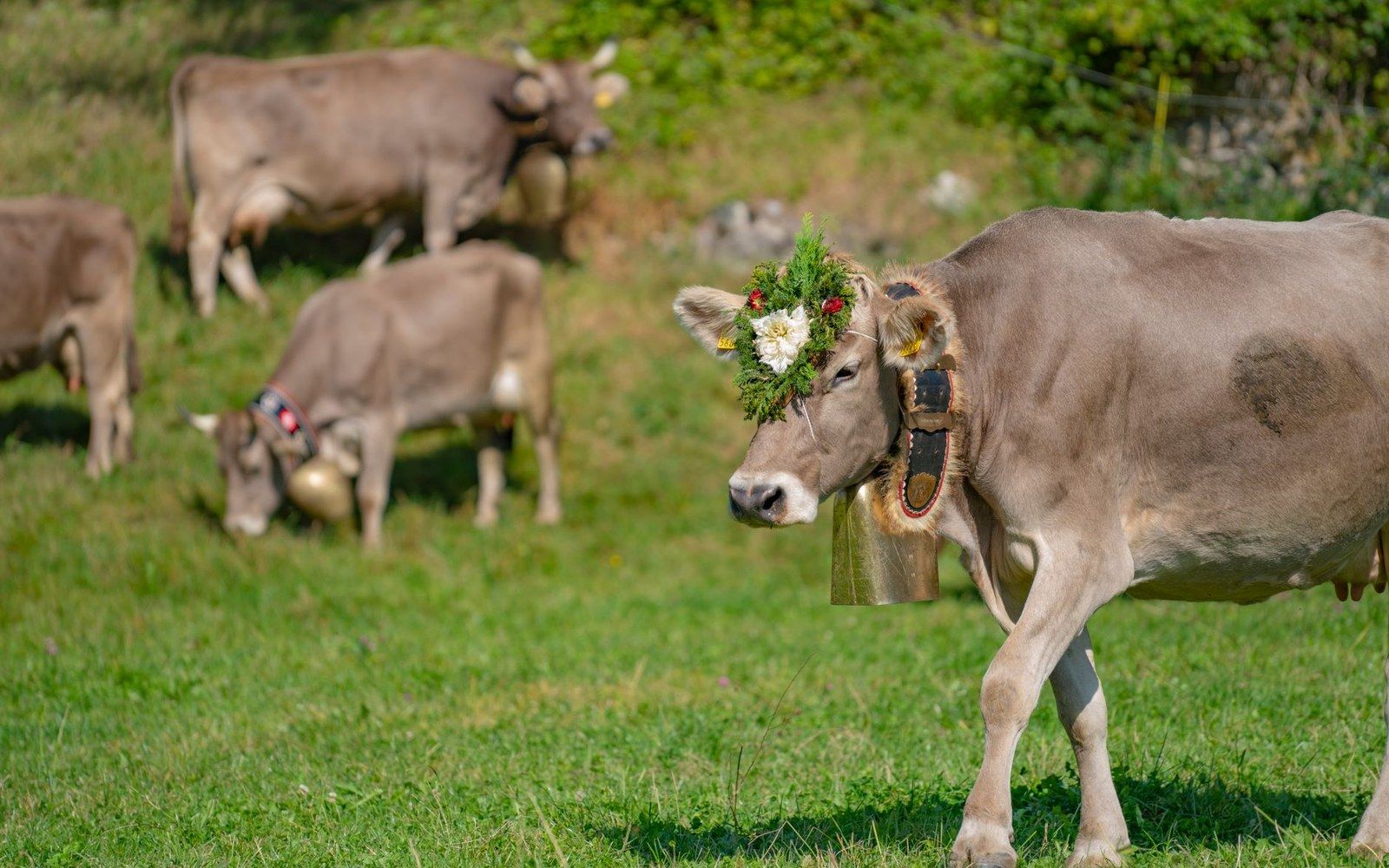
The montée is a calendar, not a decision: the herd moves when the grass does.
Photo: Sergio Zhukov / Pexels
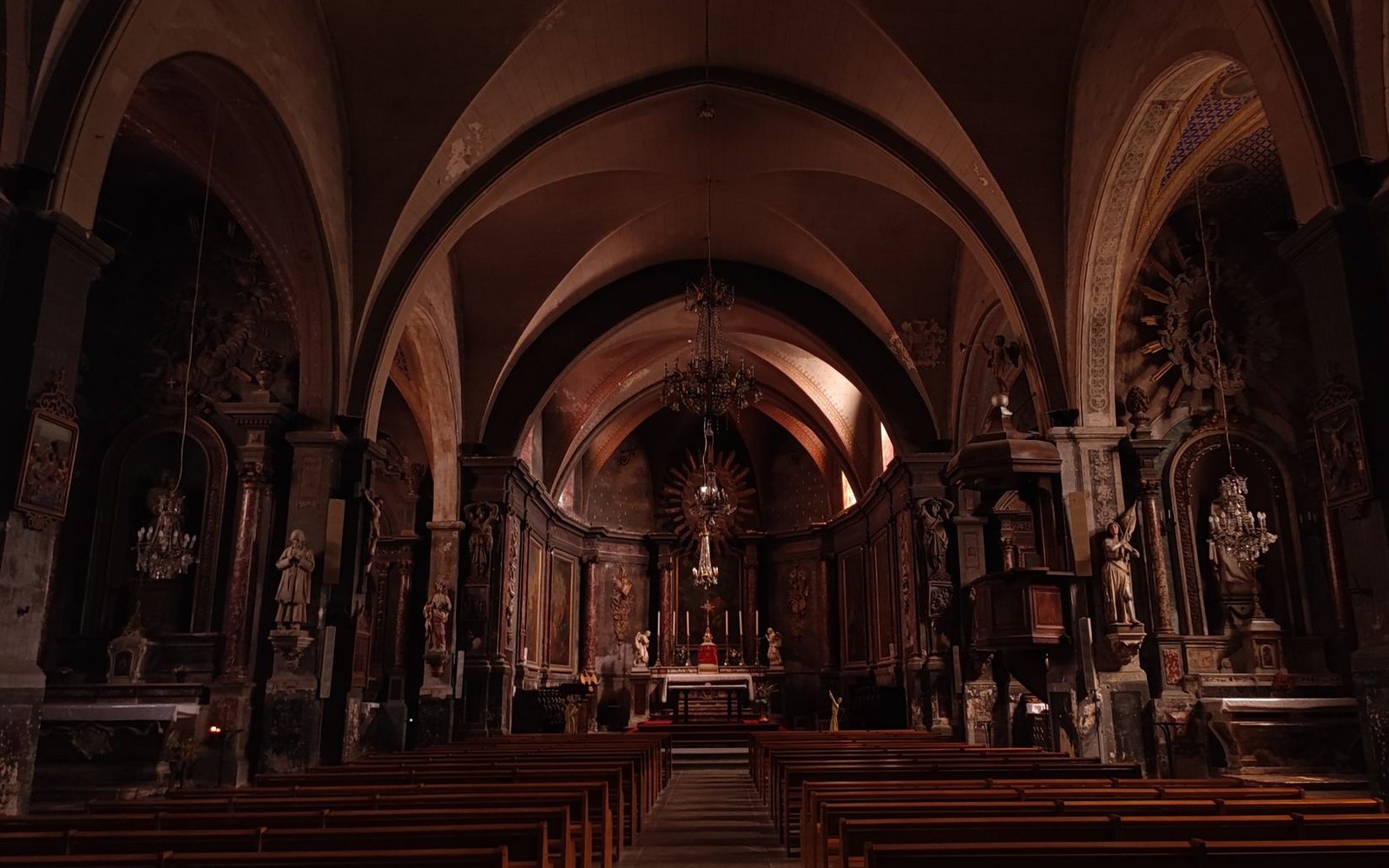
The craft is documented in the collections of the Musée des Arts et Traditions Populaires and in regional ethnographic surveys as a distinctly Bessanais production — not a generic Alpine folk art but one with identifiable local subjects. The most recognisable figures are the diables (devils), carved in arolla pine (Pinus cembra) and finished with mineral pigments in flat, dense colour. These were not devotional objects — they sat in direct iconographic tension with the religious imagery that the same carvers produced: Christ figures, saints and the panels that furnished the village church, a building whose painted interior represents the most sustained record of Bessanais craftsmanship in a single space.
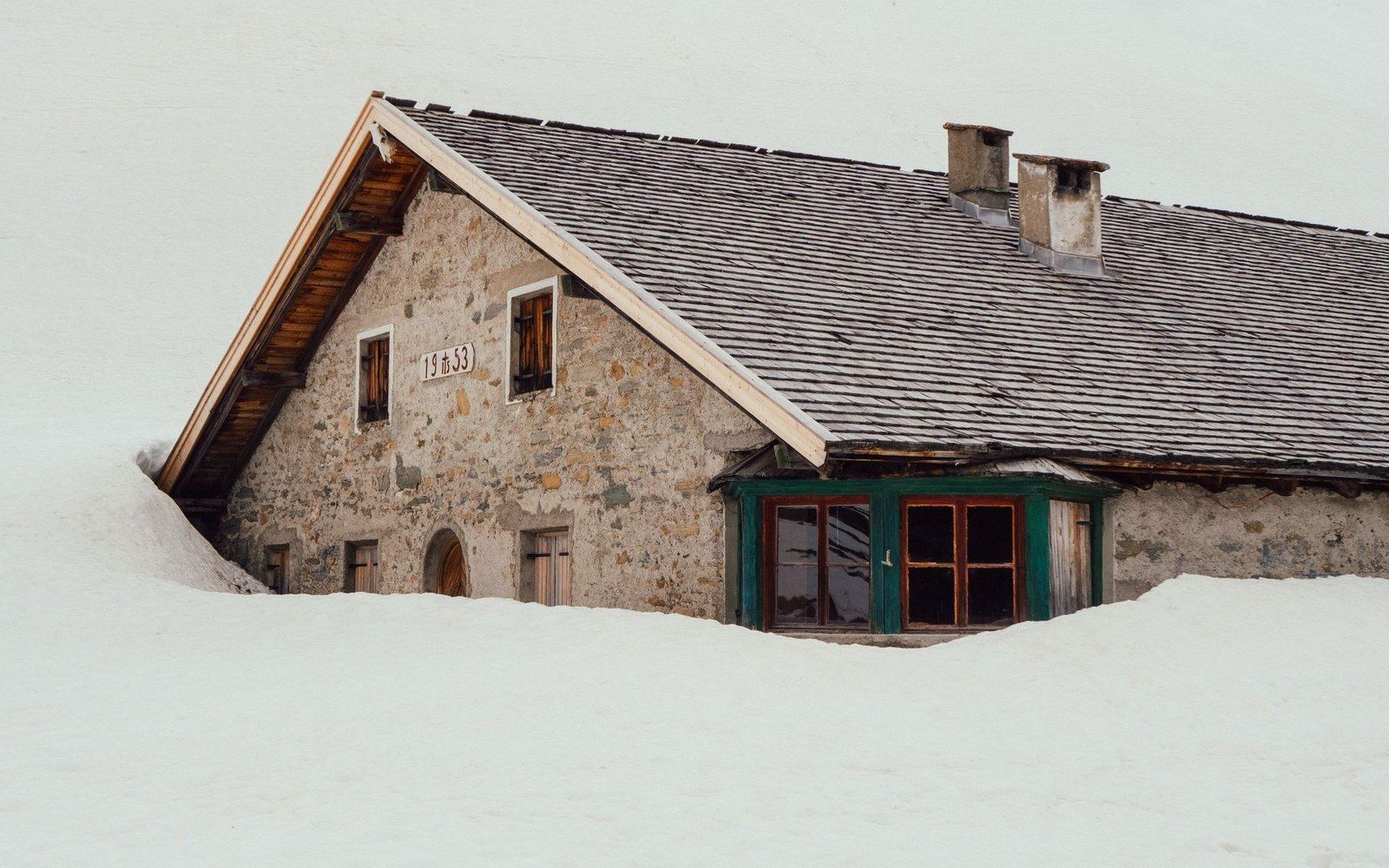
Lauze — split schist laid in courses — is what carries the snowload on an Albiez roof.
Photo: Bruno Kraler / Pexels
The raw material was arolla pine, present at high altitude throughout the upper Maurienne and Vanoise margins. The tree grows slowly; its timber is dense-grained and stable after seasoning, qualities that suited small-figure carving where detail and longevity mattered. Arolla pine was not felled commercially by the village for export — it was worked in place, piece by piece, across the winter months.
By the nineteenth century, Bessans carvers were selling through merchants reaching as far as the lowland markets of Piedmont and Savoy, the pass route to Italy providing seasonal access when the Col du Mont Cenis was clear. The Institut Géographique National ↗ records the commune at an altitude that made the arolla pine the timber of proximity rather than of deliberate selection — the carvers used what the elevation provided.
The tradition persists in Bessans as practised craft rather than reconstruction. A small number of workshops continue production under family names present in nineteenth-century parish records, though the scale is now artisanal rather than economic.
Chronology and material facts
- ·Village altitude: 1,750 m (IGN)
- ·Primary timber: arolla pine (Pinus cembra), dense-grained, found naturally at the altitude band of the upper Maurienne
- Principal subjects: diables (devil figures), religious imagery, church furnishingsSaint-Nicolas church, Bessans
- ·Distribution documented to lowland Savoy and Piedmont markets by the nineteenth century
- ·Carving tradition recorded in Musée des Arts et Traditions Populaires collections and regional ethnographic surveys