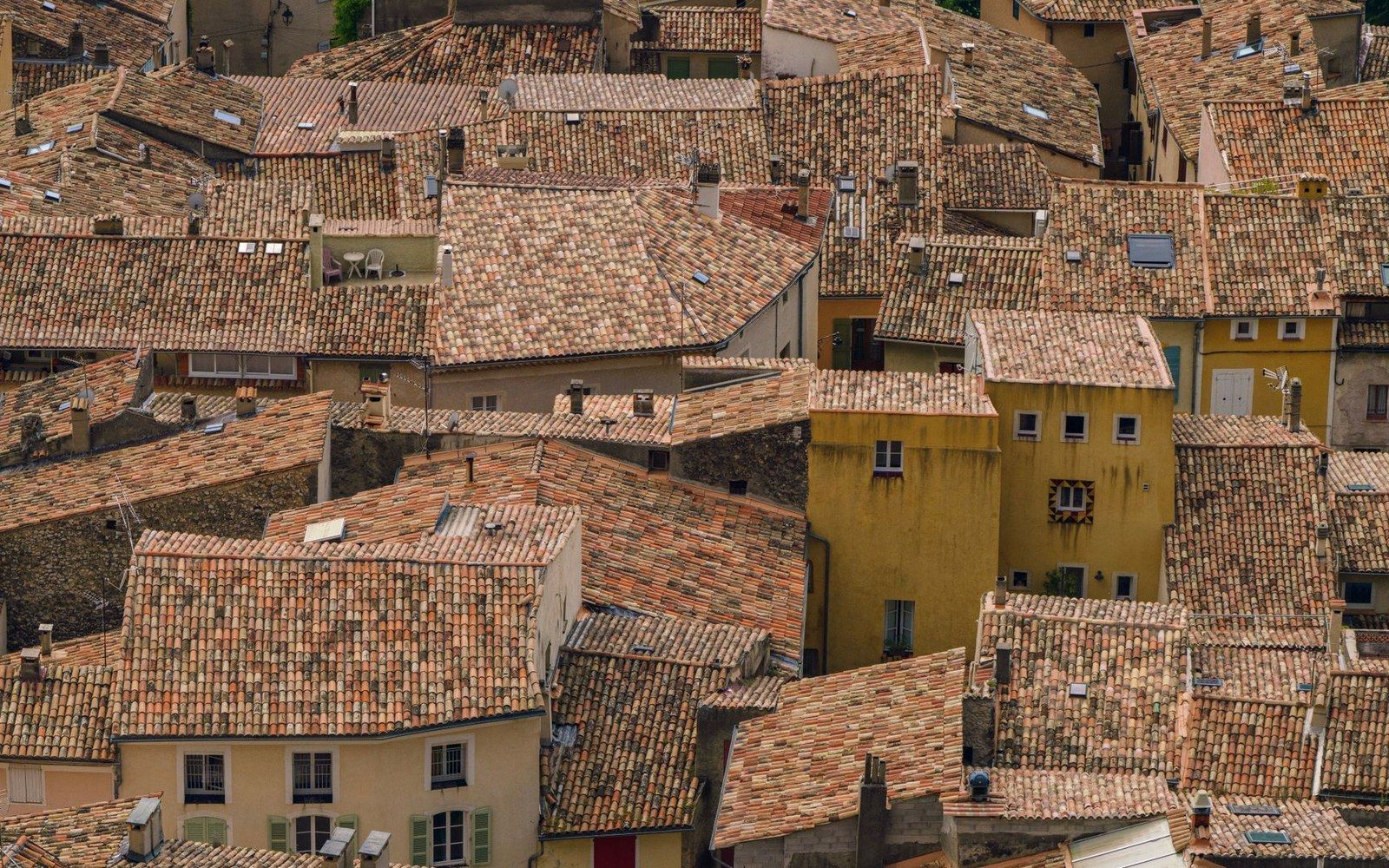
Stone under lauze, and no overhead lines in the old quarter.
Photo: Susanne Jutzeler, suju-foto / Pexels
Bonneval-sur-Arc Held the Line
The village at the foot of the Iseran that chose not to become something else
A Decision Made by Looking Up the Valley
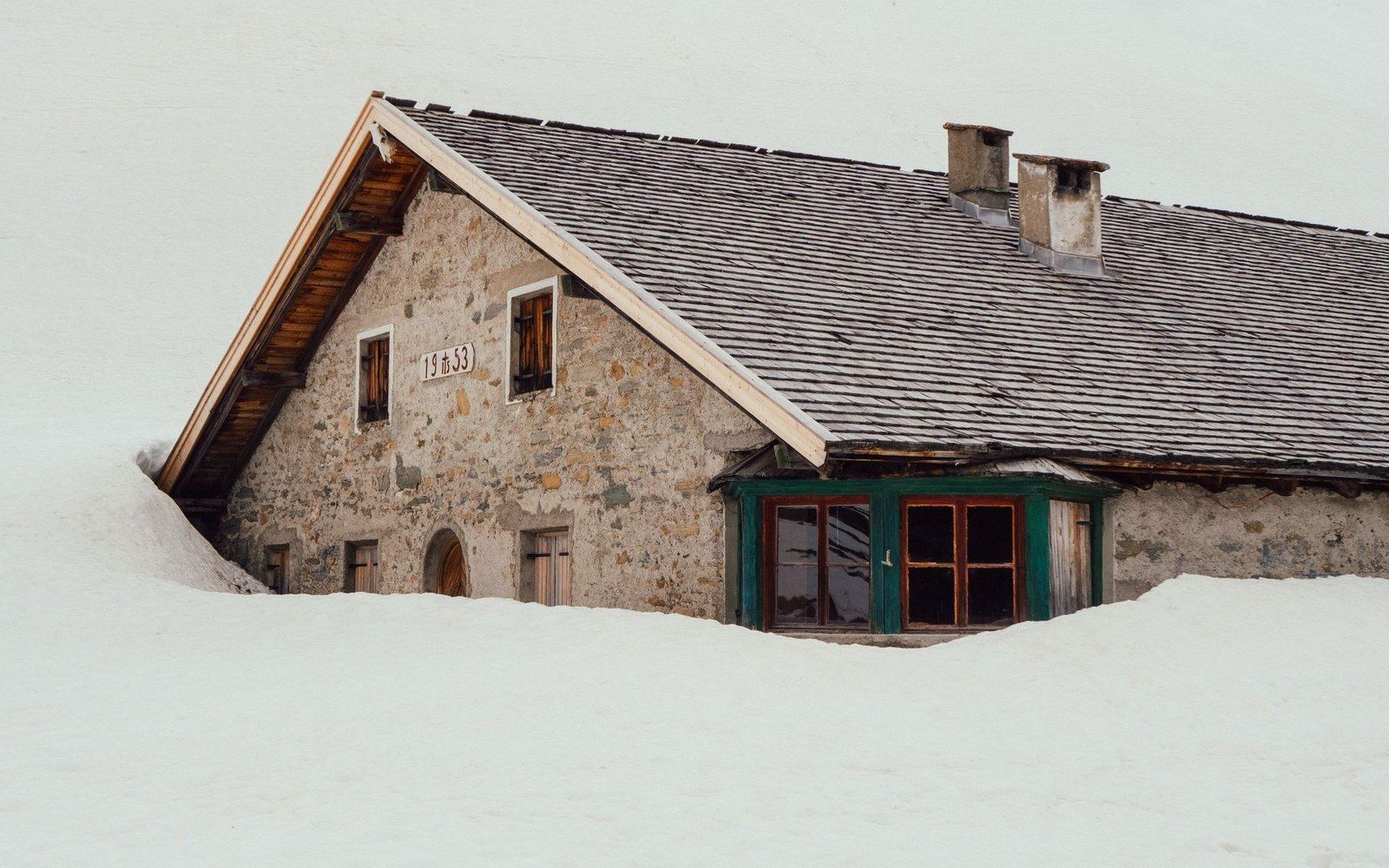
Lauze — split schist laid in courses — is what carries the snowload on an Albiez roof.
Photo: Bruno Kraler / Pexels
Bonneval-sur-Arc sits at 1,800 metres in the upper Maurienne, pressed against the southern approach to the Col de l'Iseran — at 2,764 metres the highest paved pass in the Alps. That position could have made it a transit staging post or a resort annexe. It became neither.
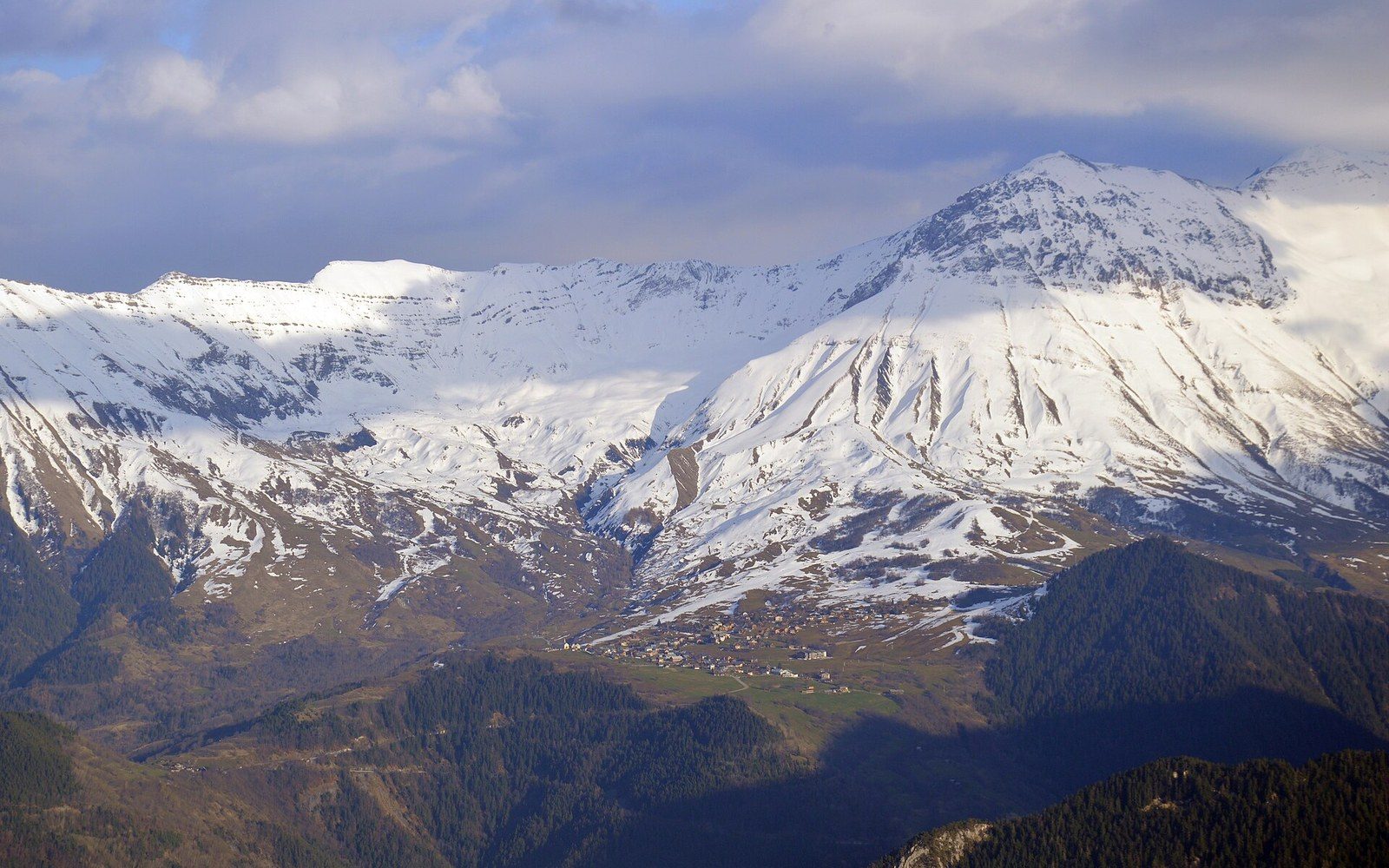
Stone base, timber frame, lauze above: three answers to the same snowload.
Photo: View of Albiez-Montrond from La Toussuire, 2023 · Wikimedia Commons
The village is classified among France's Plus Beaux Villages — a national inventory administered under criteria that include structural integrity and the absence of incongruous modern building — but its real protection comes from its listing as a site classé under the 1930 law on the protection of natural and built sites. That designation, administered by the Ministry responsible for cultural heritage, prohibits exterior modifications that would alter the ensemble's character. No concrete-panel cladding, no aluminium window frames, no signage boards in non-traditional materials. The stone walls remain stone. The roofs, where replaced, remain flat-stone lauze — the locally quarried slab that has covered these buildings for centuries — or timber shingle. The lane widths have not been adjusted for tourist-season traffic. This is not sentiment; it is statute.
The cost has been concrete. Bonneval did not attract the lift infrastructure that transformed comparable valley-head villages in the Tarentaise and the Maurienne through the 1960s and 1970s. The Plan Neige programme of 1964, which directed state capital toward purpose-built ski resorts, was not going to finance development inside a protected ensemble. The village's winter economy runs on a smaller scale: a handful of family-run establishments, limited bed capacity, no ski circus of its own. Permanent population has declined over decades as it has across the upper valley, a pattern documented consistently in INSEE communal surveys.
What the protection preserved is measurable in physical terms. The IGN ↗ records the settlement's plan as largely unchanged from its nineteenth-century cadastral form. The curved alignments of the main lane, the grouped granaries raised on stone mushroom-caps (raccards, in the local usage) against rodents, the proportions of the church and its tower — these survive as a coherent vernacular record of how a community built for survival at altitude, not for display. In a valley that has seen aluminium smelters, major hydroelectric works and the full apparatus of modern winter tourism, Bonneval-sur-Arc's stillness is not accidental. It was chosen, and paid for, quietly.
Chronology
- 1930French law on protection of natural and built sites, the legislative basis for Bonneval's listing 1937 Col de l'Iseran road opens, placing Bonneval at a high-profile through-route
- 1964Plan Neige programme directs state investment toward purpose-built ski infrastructure