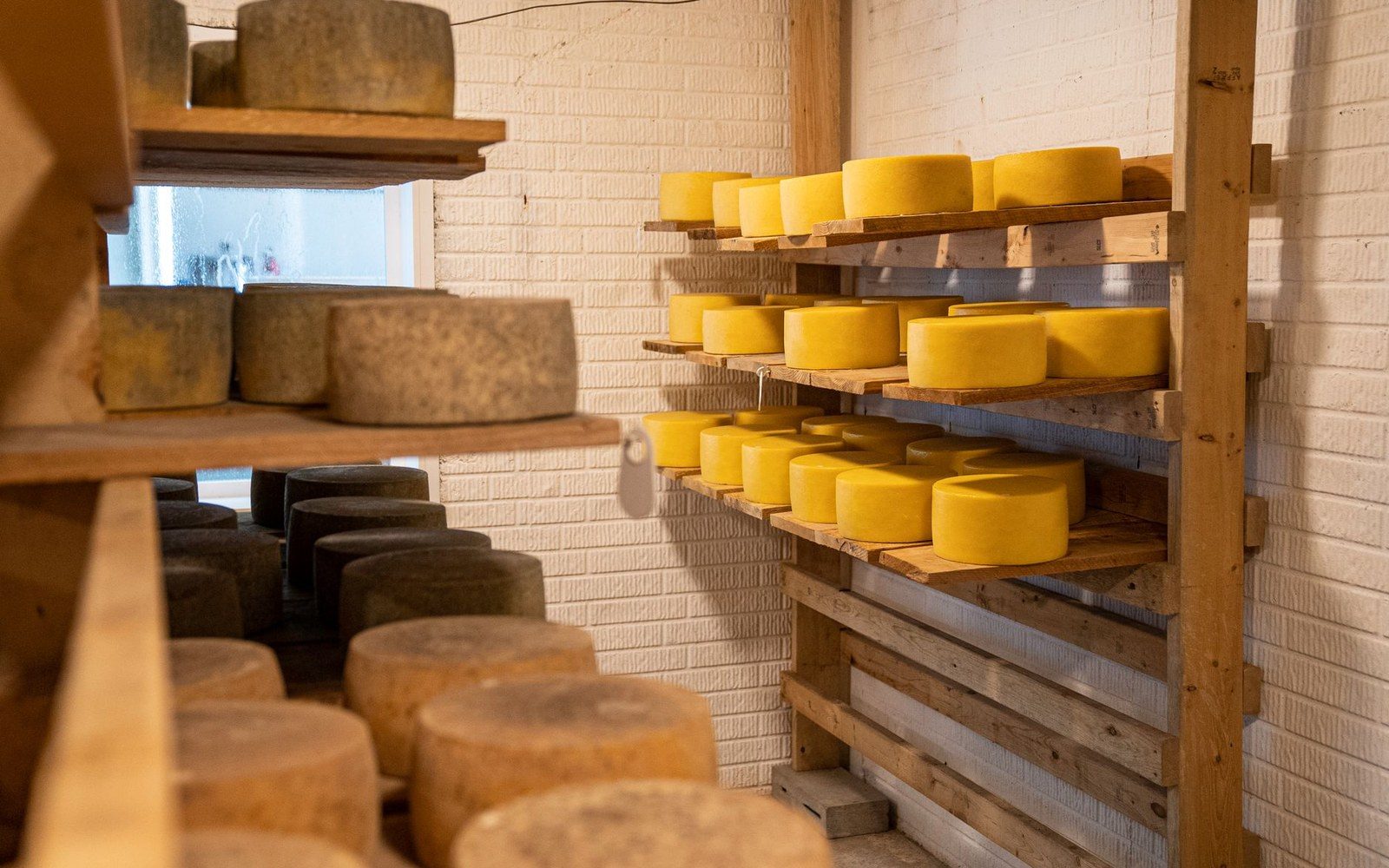
The minimum wheel is 65 cm across and the herd is specified too. Hence the cooperative.
Photo: Mark Stebnicki / Pexels
The Cheese That Made a Cooperative Necessary
Beaufort's AOC requirements are not marketing language — they are engineering constraints that forced the valley's producers into a single room.
Why One Farm Was Never Enough
The Beaufortain — the high massif above the Tarentaise, centred on Beaufort-sur-Doron — produces a cooked pressed cheese whose legal definition is among the strictest in French dairy law. The AOC specification for Beaufort, formalised in 1968 and tightened since, requires that milk come exclusively from Tarine or Abondance cattle, that summer production use alpage milk from herds grazing above 1,500 metres, and that every wheel age for a minimum of five months in a cold, humid cellar. The wheel itself must measure between 35 and 75 centimetres in diameter and weigh between 20 and 70 kilograms and a characteristic concave rind pressed in by a beechwood cercle — a wooden hoop applied during aging.
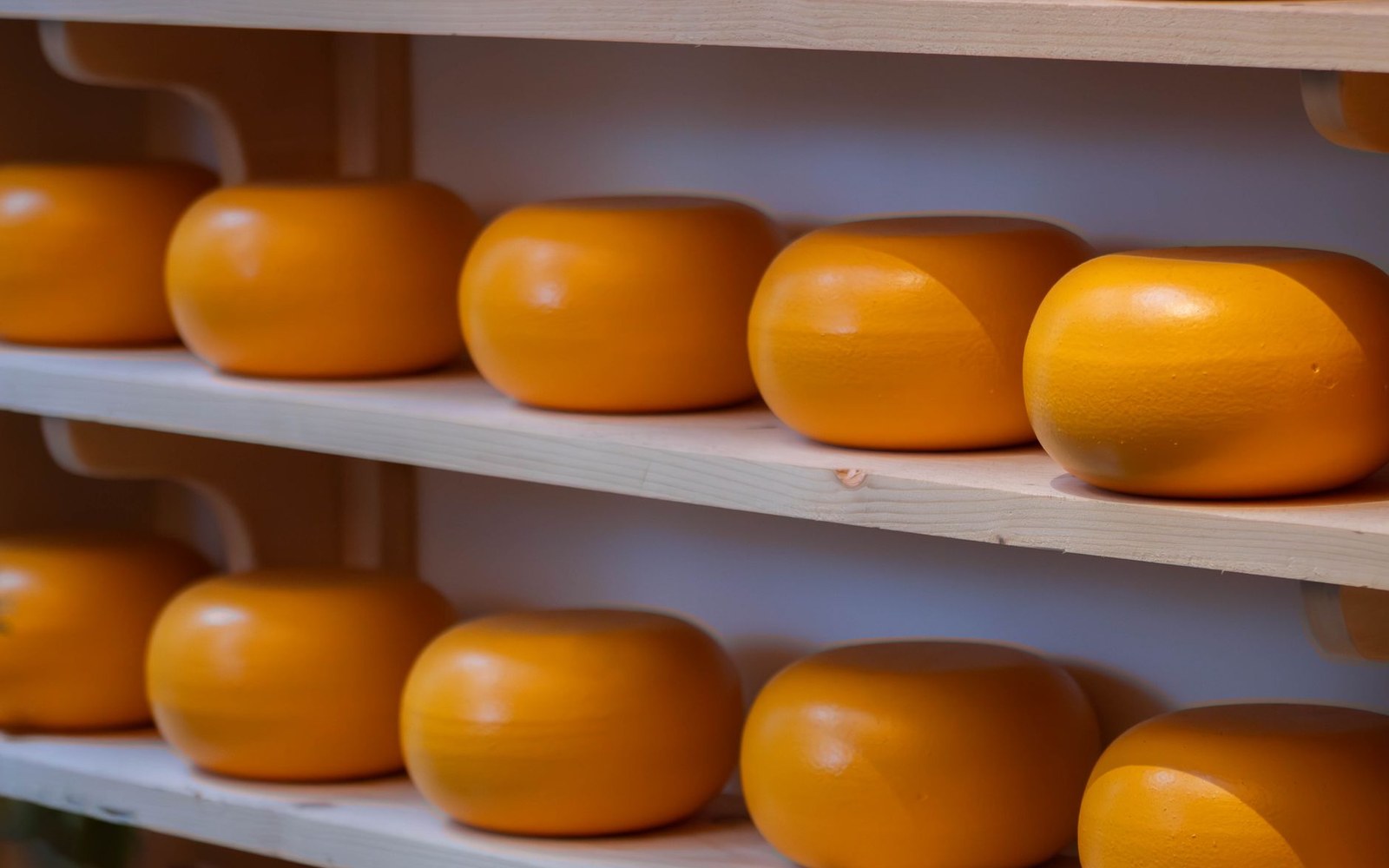
35 to 45 kg a wheel, turned and rubbed on a schedule the AOC sets out.
Photo: Najm Shihabi / Pexels
Each of these requirements is individually demanding. Together, they create a production system that no single farm in the valley could sustain alone. An alpage herd large enough to fill a vat, a cellar cold enough to hold hundreds of wheels through five months of maturation, the labour to turn and salt each wheel through its entire aging period: the capital cost and the seasonal risk, distributed across one household, would be prohibitive. The cooperative did not emerge because farmers felt cooperative. It emerged because the cheese demanded it.
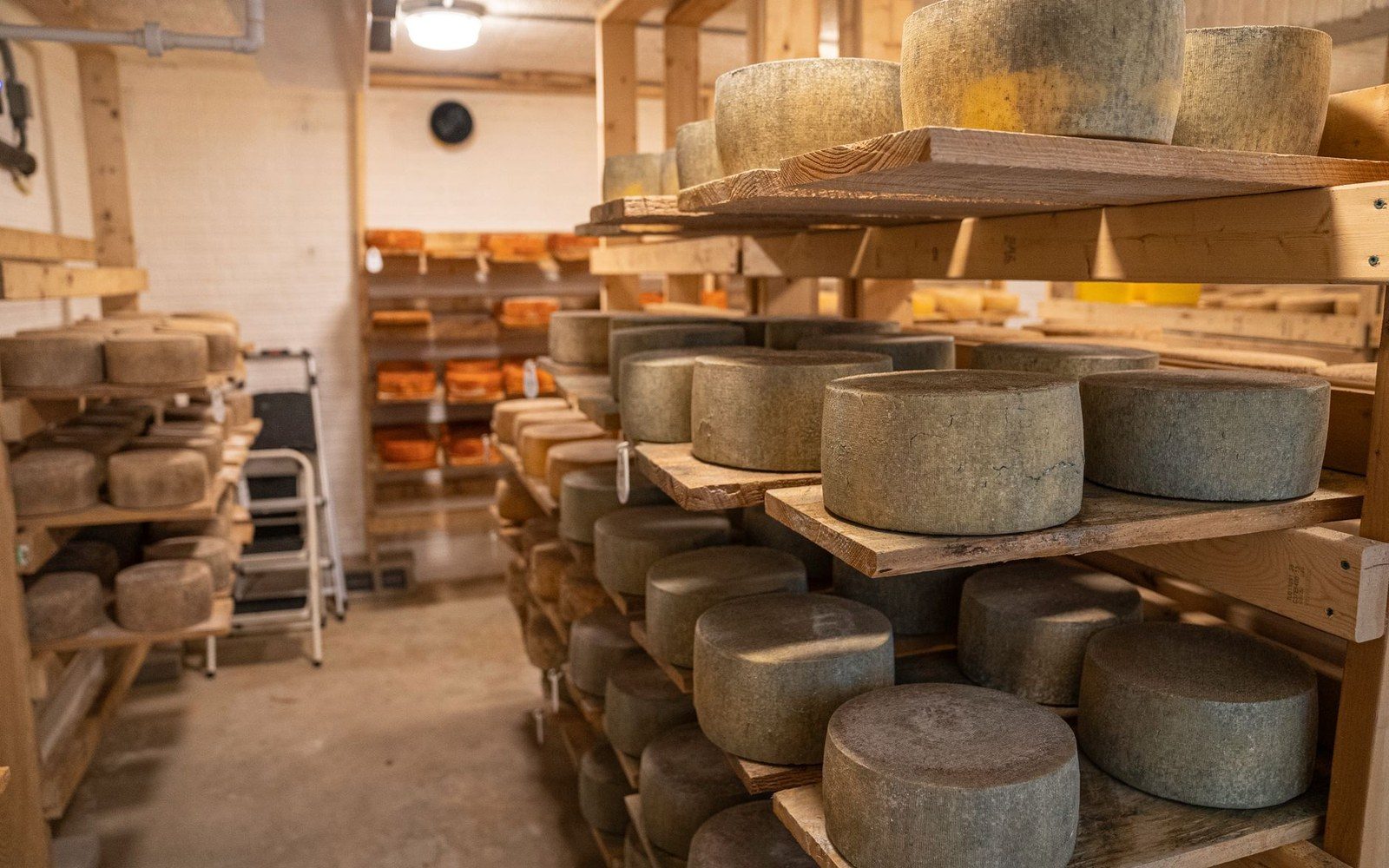
Turned and salted on pine. The shelf is written into the specification.
Photo: Mark Stebnicki / Pexels
The Coopérative Laitière du Beaufortain, based in Beaufort-sur-Doron, collects milk from farms across the valley and the surrounding high pastures, processes it under AOC conditions, and manages the aging cellars that bring the cheese to market. Its production figures are substantial for an appellation of this scale: the cooperative handles a substantial share of all Beaufort produced, making it one of the appellation's principal producers. The collective structure allows it to operate the refrigerated aging cellars — maintained at temperatures between 8 and 14 degrees Celsius with humidity above 92 percent — as a shared infrastructure, making the investment economically coherent across dozens of member farms rather than concentrated on any one.
The Alpage Constraint
The most operationally complex part of the AOC specification is the distinction between winter Beaufort and Beaufort d'alpage. The latter, produced only during the summer transhumance — when herds move to high-altitude pastures above 1,500 metres — commands higher prices and requires separate tracking through the production chain. The flavor difference is real: alpage milk, drawn from cattle grazing on botanically diverse high pastures, produces wheels with a more complex and aromatic character than those made on lowland winter feed. The AOC rules formalise what producers already knew.
For the cooperative, managing alpage production means coordinating milk collection at altitude, tracing each batch through the aging cellar by date and origin, and maintaining the documentation that allows a wheel to carry the Beaufort d'alpage designation at sale. This administrative and logistical load — tracking which milk came from which altitude band in which week of a particular summer — is again something no individual producer could practically sustain. The Coopérative Laitière du Beaufortain ↗ exists, in part, as the record-keeping infrastructure that the appellation makes necessary.
Beaufort on the valley's own geometry, with the neighbouring cols for scale.
Geometry: IGN / project map kit
The AOC framework itself, administered under French and European law, links geographic origin, production method and product identity in a way that enforces collective accountability. A single non-compliant wheel implicates the designation; the appellation's value is shared across all producers and therefore must be defended collectively. This is a structural argument for cooperation that has nothing to do with sentiment.
What the Beaufortain demonstrates is that an AOC specification, read carefully, is not a marketing document but a production constitution — one that pre-determines the economic organisation of the producers who fall under it. The Coopérative Laitière du Beaufortain is the form that Beaufort's AOC took when it met the reality of the valley's dispersed family farms. The cheese made the cooperative necessary, and the cooperative is what keeps the cheese real.
Key production figures
| Minimum aging period under AOC specification | 5 months |
|---|---|
| Wheel weight range | 35–75 kg |
| Minimum wheel diameter | 35 cm |
| Cellar temperature range | 8–14 °C; humidity above 92% |
| Cooperative annual output | above 450 tonnes |
| Alpage threshold altitude | 1,500 m |