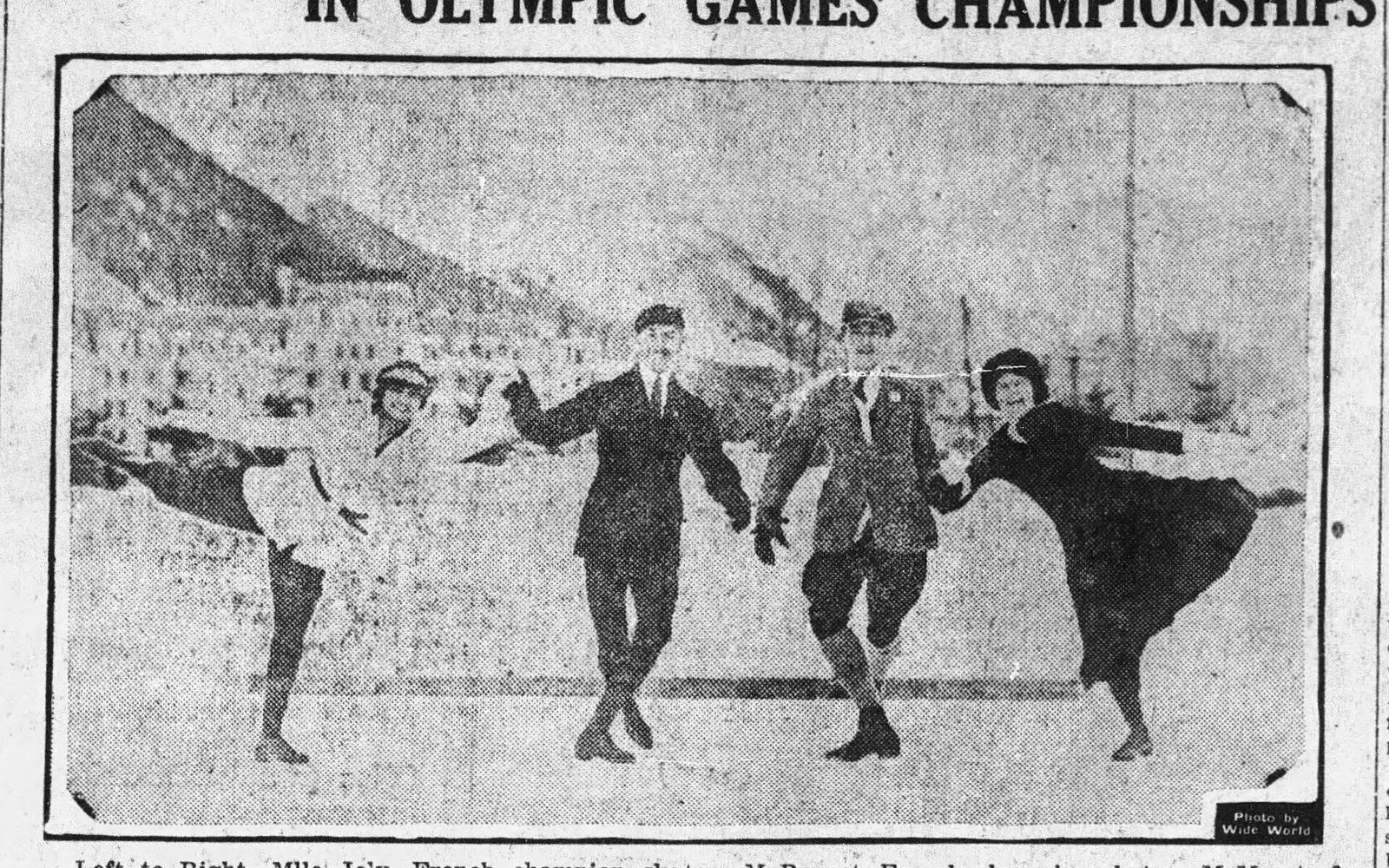
Chamonix, 1924. The first Winter Games left a rink and a set of expectations.
Photo: Four Star Skaters Who Took Part in Chamonix championships, 1924 photo by Wide World · Wikimedia Commons
Chamonix 1924: What the Games Actually Built
The first Winter Olympics left a specific inventory. That inventory is smaller than the legend.
What Chamonix Had, and What It Needed
Chamonix in January 1924 was already a functioning resort town. The Mont Blanc railway had connected it to Saint-Gervais since 1901, and the village had hosted winter tourists — mostly British — since the 1890s. A skating rink existed. A bobsleigh run had operated on the slopes above the town since before the First World War. The infrastructure problem was one of scale and standardisation, not of starting from nothing.
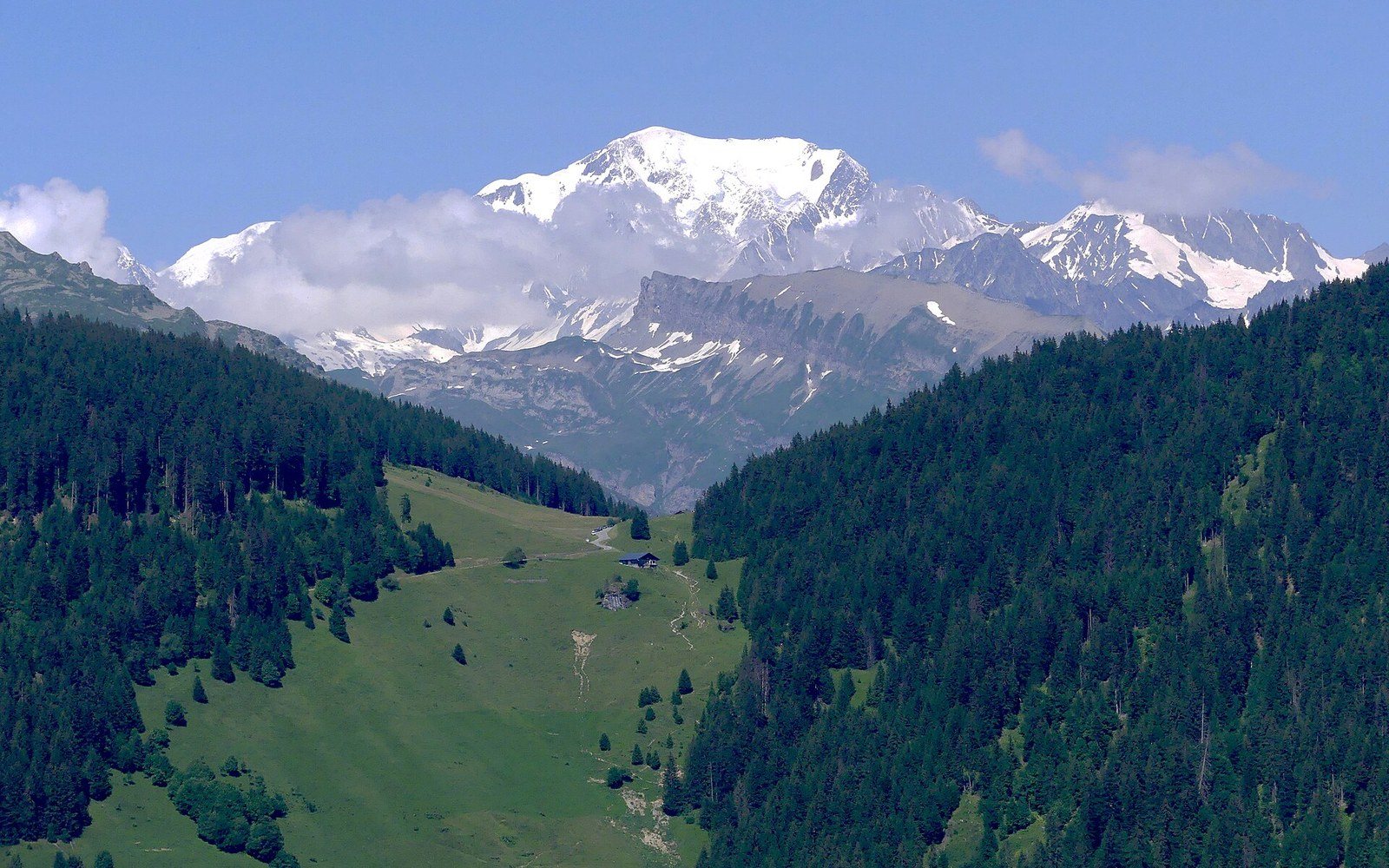
4,808 m. Balmat and Paccard went up on 8 August 1786 and came back down.
Photo: Col du Pré et Mont-Blanc depuis plateau de Cuvy en été (juillet 2024) 2 · Wikimedia Commons
The International Olympic Committee had not, in fact, originally sanctioned a Winter Olympics at all. What opened on 25 January 1924 was styled the "Semaine Internationale des Sports d'Hiver" — the International Week of Winter Sports — held under the patronage of the IOC but not yet given Olympic status retrospectively until 1926, when the IOC voted formally to designate it the first Winter Games. This distinction matters because the IOC's own programme documentation ↗ records the event's provisional character: the construction programme was shaped accordingly.
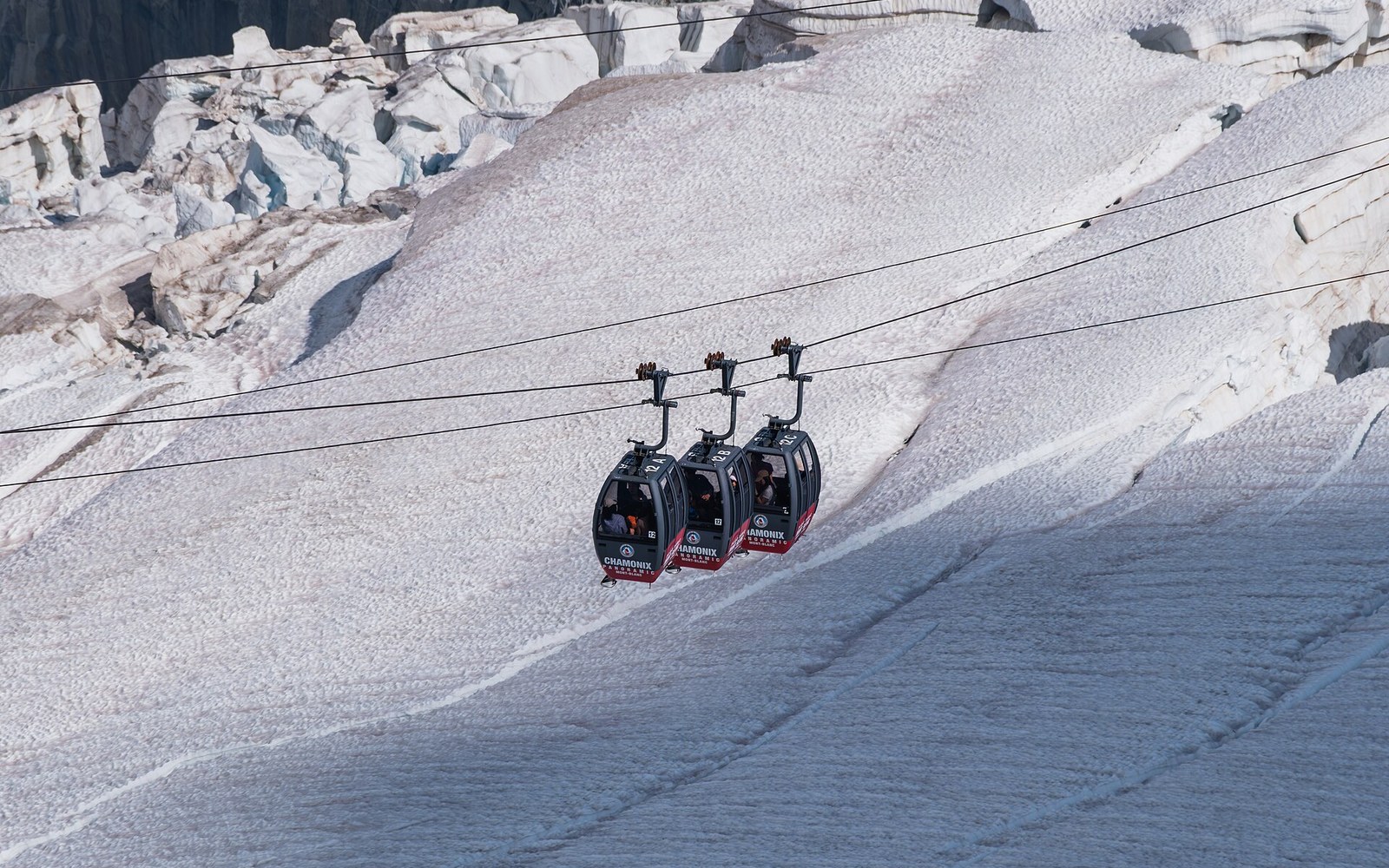
Two spans, one intermediate station, and a summit stop at 3,842 m.
Photo: Cable cars crossing crevassed glacier below Aiguille du Midi, Chamonix, Haute-Savoie · Wikimedia Commons
The Inventory
What was actually built or substantially upgraded for the 1924 programme was modest by later standards. The main speed-skating oval was created on the Plan des Praz, a flat area north of the town centre. It was a temporary construction: a levelled and flooded field, maintained by a small team of ice-workers throughout the games. No permanent stadium shell enclosed it.
The ice hockey rink was similarly an open-air installation on the same site, sharing the flooded surface. The bobsleigh run — the Cresta-style course that had existed informally before — was formalised with banked curves and timing equipment for the 1924 events but remained a natural-ice installation dependent on weather. These were not reinforced-concrete facilities with mechanical refrigeration. Mechanical ice-making did not arrive at Chamonix until later decades.
The ski jumping hill used for the competition was at Les Bossons, south of the town, and required earthworks to establish a consistent in-run and landing slope. That gradient survived into subsequent use. Nordic ski events — cross-country and the military patrol, forerunner of the biathlon — ran on trails in the valley, along routes that already served touring skiers. No new trail infrastructure was purpose-built.
4,808 m. Balmat and Paccard went up on 8 August 1786 and came back down.
Photo: Col du Pré et Mont-Blanc depuis plateau de Cuvy en été (juillet 2024) 2 · Wikimedia Commons
The one structure that constituted genuine lasting investment was the main Olympic hall — a covered building used for the opening ceremony and for figure skating, constructed on the Place du Mont Blanc. It had a roof but open sides; contemporary photographs held in the Bibliothèque nationale de France ↗ show spectators in overcoats watching compulsory figures on a surface open to the mountain air. The building was substantial enough to remain in use for some years after the games, though not in its original form.
Sixteen nations sent 258 competitors, according to IOC records. The sports programme covered skiing, skating, ice hockey, bobsleigh, and the military patrol. Curling appeared, though its status in the programme was ambiguous and it was not consistently counted in the medal table.
What Remained
The honest answer to what the 1924 games permanently added to Chamonix is: a reclassified skating area on the Plan des Praz, a regularised bobsleigh course, a ski jump with engineered earthworks, and a covered hall that outlasted the week. The town's rail access, its hotels, its existing sporting culture — these predate the IOC's interest entirely.
The games' lasting significance to Chamonix was not infrastructural but institutional. The 1924 event established the Winter Olympics as a category, separating cold-weather sport from the summer programme that had, awkwardly, accommodated ice events at London in 1908 and Antwerp in 1920. That separation created the competitive circuit — governed thereafter under the IOC framework — into which every subsequent Alpine resort, from Albertville to Innsbruck, would eventually be drawn. Chamonix built relatively little in concrete. It built the template.
Chronology
- 1901Mont Blanc railway opens, connecting Chamonix to Saint-Gervais
- 25 January 1924"Semaine Internationale des Sports d'Hiver" opens, Chamonix
- 1926IOC votes retrospectively to designate 1924 event the first Winter Olympics
- ·258 competitors, 16 nations, per IOC records