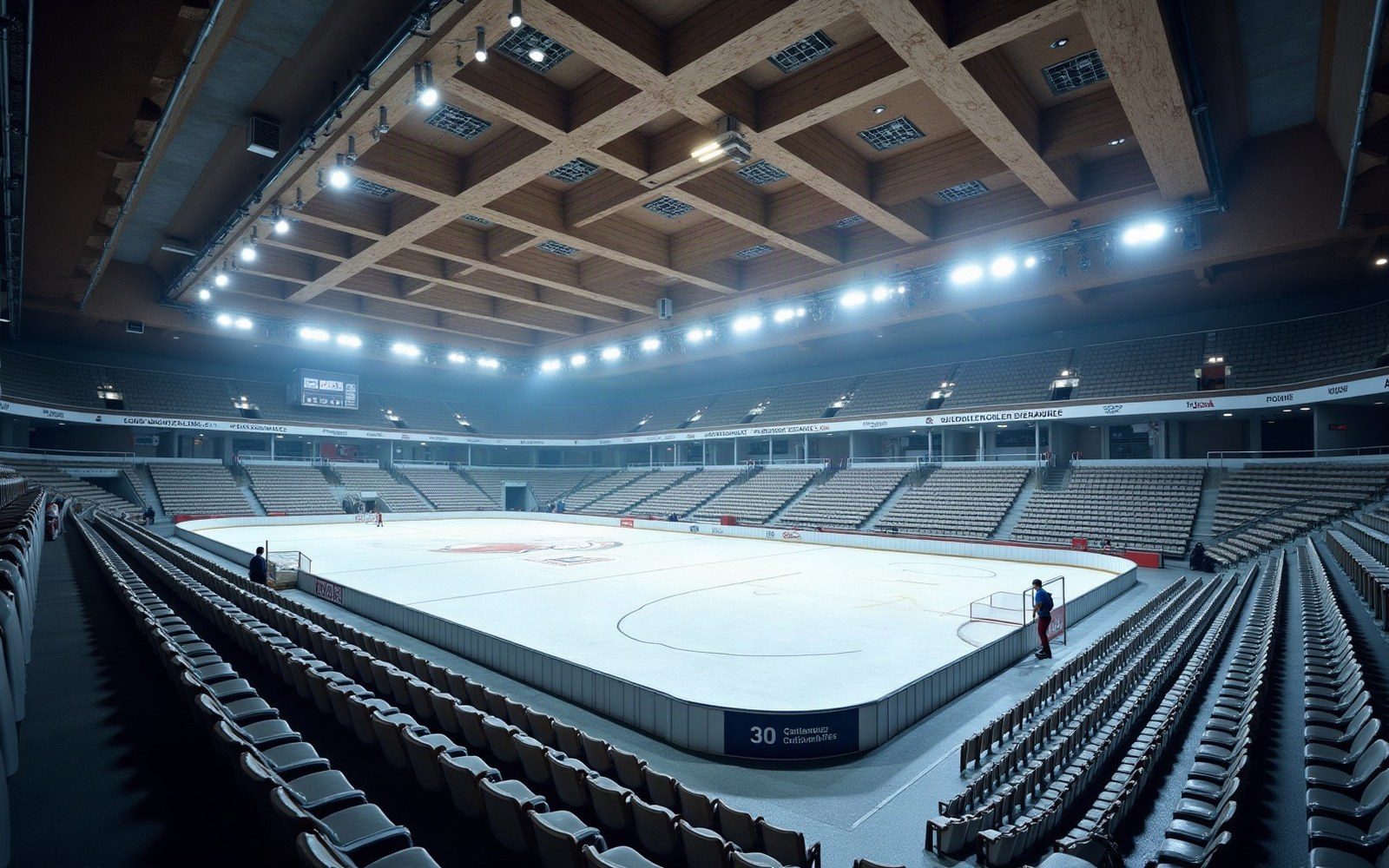
An Olympic rink after the event. The ledger is what the Tarentaise kept.
Albertville 1992: Read the Ledger
The promise was dispersed by design
The IOC awarded the 1992 Winter Games to Albertville in October 1986, after a bid that leaned heavily on the Tarentaise valley's existing resort infrastructure. The pitch was unusual: rather than concentrating events in one place, the organisers proposed a scattered model, with seventeen competition sites spread across the Savoie département. Albertville itself — a market town at the confluence of the Arly and the Isère, altitude 345 metres — would host the opening ceremony and speed skating. Everything else would go up the valley or into the mountains.
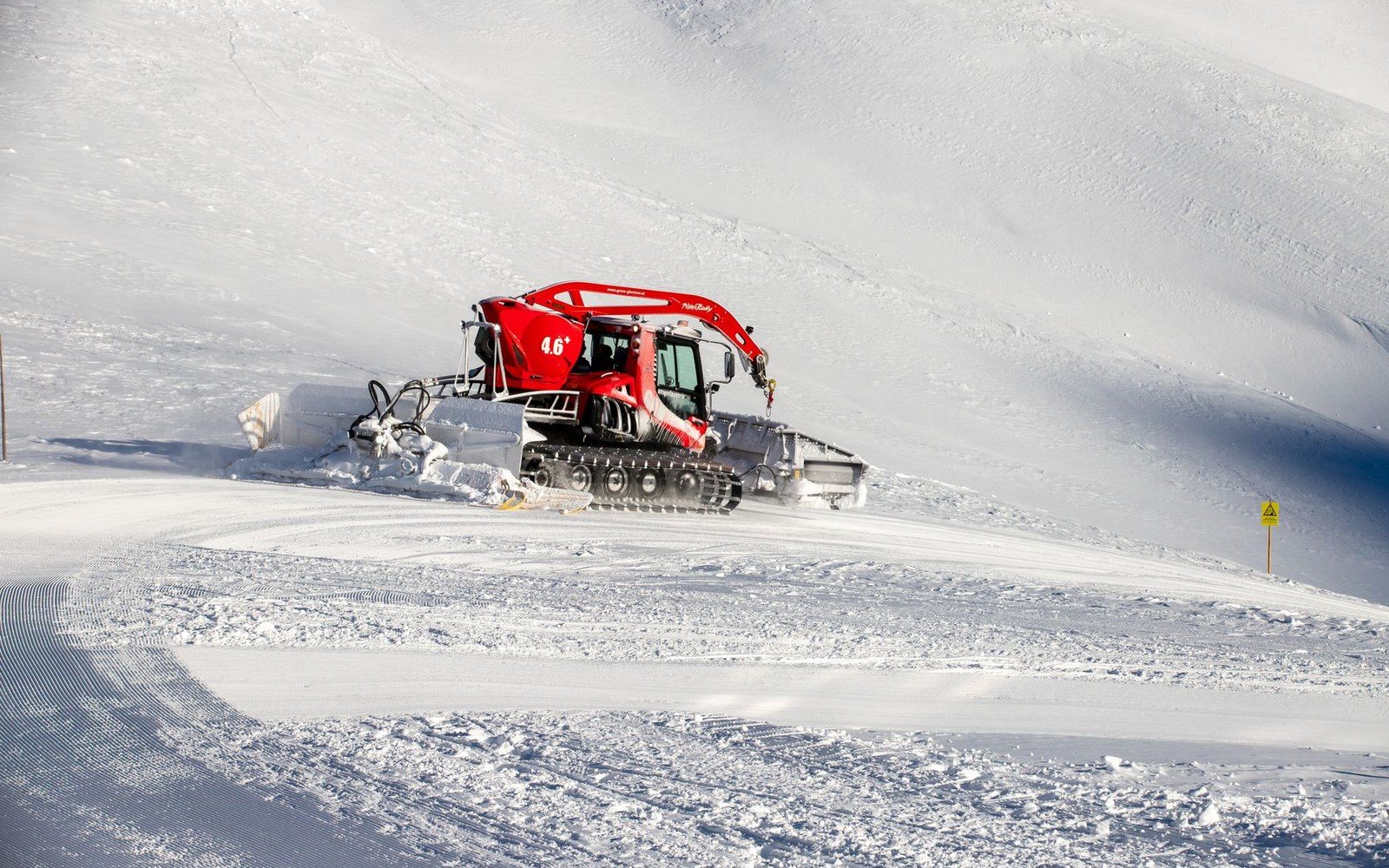
Every lance on the piste is an intake somewhere lower down the mountain.
Photo: Alan Kabeš / Pexels
The organisation committee, the Comité d'Organisation des Jeux Olympiques d'Albertville et de la Savoie (COJO), made this dispersal a selling point. It would, the argument ran, distribute the economic benefit across a wider region and avoid burdening a single centre with infrastructure it could not absorb afterwards. Val d'Isère hosted alpine skiing. Les Arcs ran the men's speed skiing demonstration event. La Plagne built its bobsleigh and luge track. Courchevel was designated as the ski jumping venue. Tignes took freestyle skiing. Pralognan-la-Vanoise held curling. The list ran to near every significant Tarentaise resort.
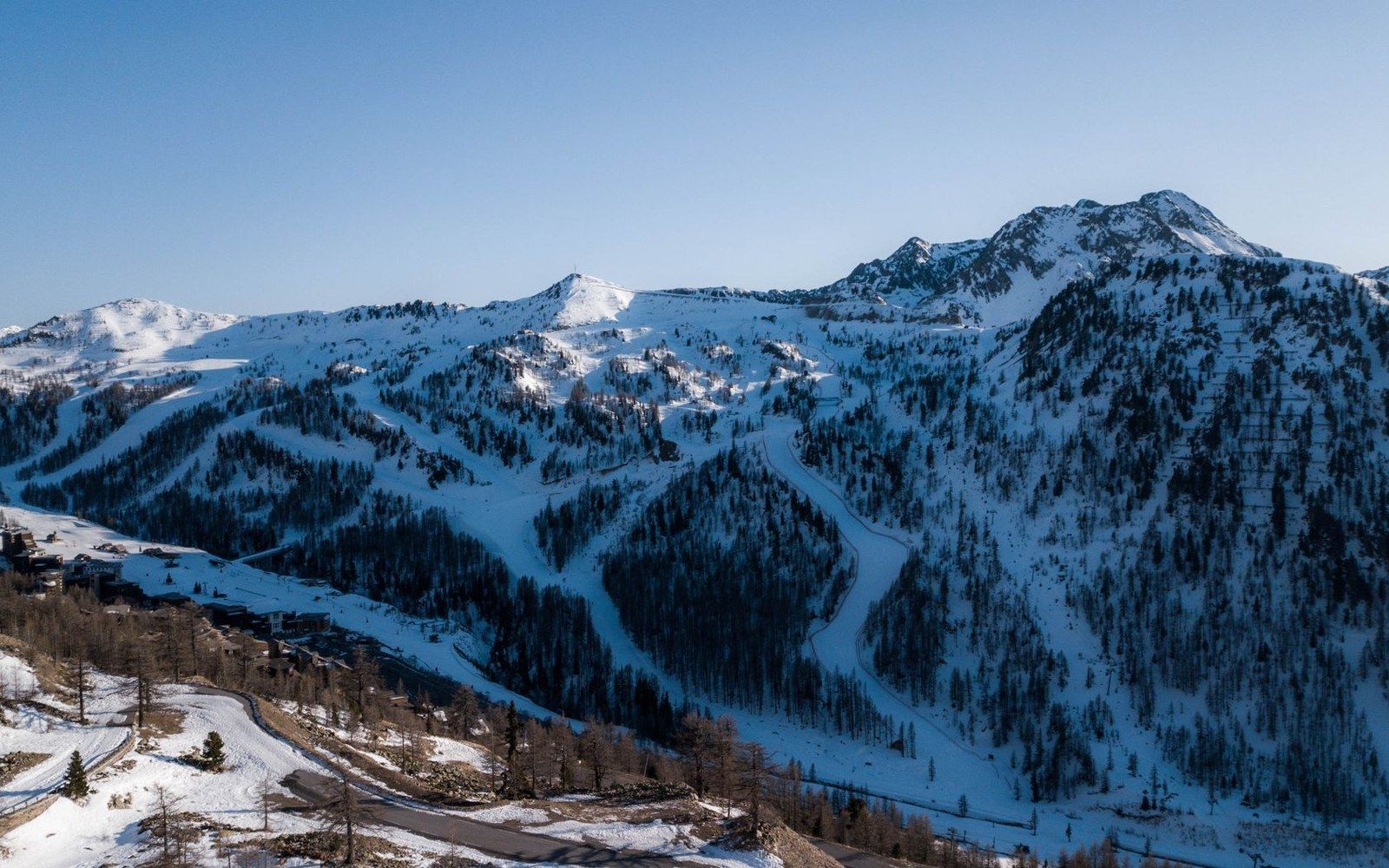
Built from the lift line outward: a Plan Neige resort starts at its infrastructure.
Photo: Gaetan THURIN / Pexels
What the ledger records
The concrete outputs are a matter of public record. Infrastructure spending on the Games has been assessed at approximately 8.8 billion francs in total, of which the majority went to transport and access: the motorway extension connecting Albertville to Moûtiers was accelerated, the Route Nationale 90 upgraded, and rail access to the valley improved under coordination with the SNCF. These were not new ambitions; several projects had been planned independently and were brought forward by the Olympic deadline. The Games functioned, in that sense, as a forcing mechanism rather than a generator of otherwise-absent will.
The ice hall built in Albertville — the Halle Olympique — was purpose-designed for the indoor ice disciplines, figure skating and short-track speed skating, and stands as one of the Games' more visible built legacies. The bobsleigh track at La Plagne, a reinforced concrete structure cut into the hillside above the resort, required capital that no private operator would have committed outside an Olympic framework; it continues to function ↗ as a public recreational and training facility, one of the rare post-Games venues that found a stable second purpose. The ski jump complex at Courchevel likewise outlasted the Games in active use.
What the Tarentaise did not receive was the kind of urban legacy that organisers sometimes promise and rarely deliver. Albertville's town centre gained ceremony infrastructure — the Anneau de Vitesse staging area, temporary stands — but the lasting built fabric added to the town itself was modest. Population did not grow markedly in the years following. The economic study conducted by the Chambre de Commerce et d'Industrie de la Savoie in the mid-1990s found that the principal lasting benefit was accelerated road infrastructure, not the multiplication of tourist capacity some had projected.
Every lance on the piste is an intake somewhere lower down the mountain.
Photo: Alan Kabeš / Pexels
Environmental balance was a point of open contention during the planning phase. The IOC's own evaluation commission noted, in its 1992 post-Games report, that the dispersed-site model created exceptional road-traffic pressure during competition weeks, and that certain high-altitude construction — notably grading at alpine skiing venues — disturbed terrain that had not previously been subject to intensive engineering. The Parc national de la Vanoise boundary was not crossed; the organising committee had committed to that constraint from the outset, and held to it.
The Games cost more than the original budget. The revenue from broadcast rights — the IOC had negotiated a significant US television contract — covered a portion of the deficit, but public subsidy from the state, the Savoie département and the communes involved made up the remainder. The final financial settlement was not concluded until well into the mid-1990s.
Reading the ledger without editorialising means recording both columns. The Tarentaise received motorway access years sooner than the road programme would otherwise have delivered it. Several mountain venues gained permanent facilities whose operating costs then fell to local authorities. The town that lent its name to the Games hosted the ceremonies and the speed-skating events, and the valley absorbed two weeks of scrutiny that no amount of marketing could have purchased. Whether the accounts balance depends entirely on which costs and which beneficiaries a reader chooses to weight.
Chronology
- October 1986IOC awards 1992 Winter Games to Albertville
- 1986–1992construction phase: motorway extension, RN90 upgrade, venue builds
- 8–23 February 1992Games held across seventeen Savoie sites
- Mid-1990sCCI de la Savoie economic assessment published; financial settlement concluded