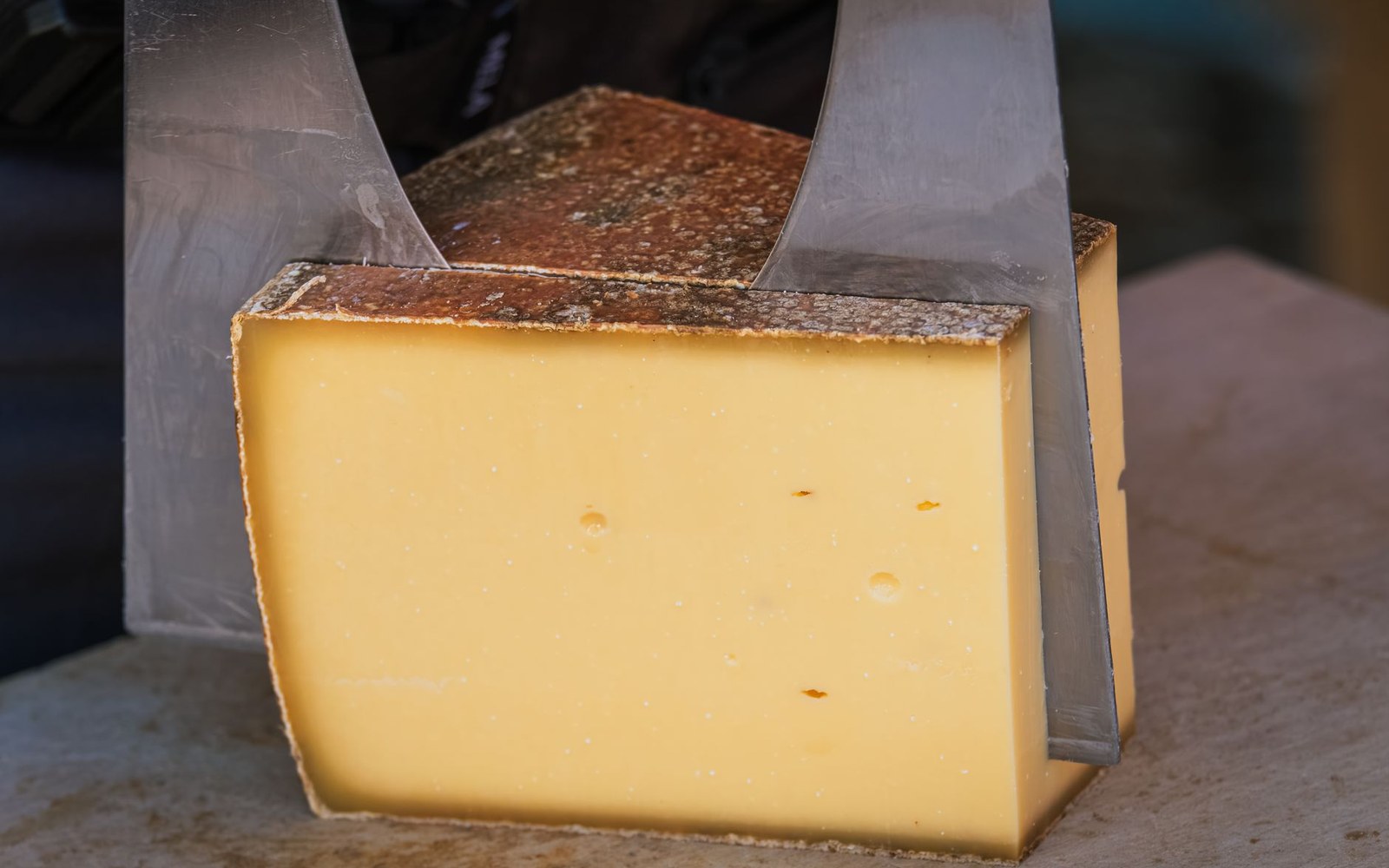
Skim the milk for butter and the curd that remains makes Tomme.
Photo: Ilo Frey / Pexels
Tomme de Savoie: The Cheese the Alpage Kept for Itself
After the cream was lifted, what remained was still worth pressing.
The Economy of Skimmed Milk
Beaufort is a cheese of accretion — the full-cream milk of Tarentaise herds, built into wheels that age for months in co-operative cellars. Tomme de Savoie begins precisely where Beaufort does not: with what is left once the cream has been skimmed off to make butter. At the alpage — high-altitude summer pasture — butter was the cash product, the thing that descended to the valley with commercial value. The remaining part-skimmed or fully skimmed milk was pressed into Tomme: denser in structure than a fresh cheese, lower in fat than any of Savoie's prestige wheels, and shaped by necessity rather than ambition.
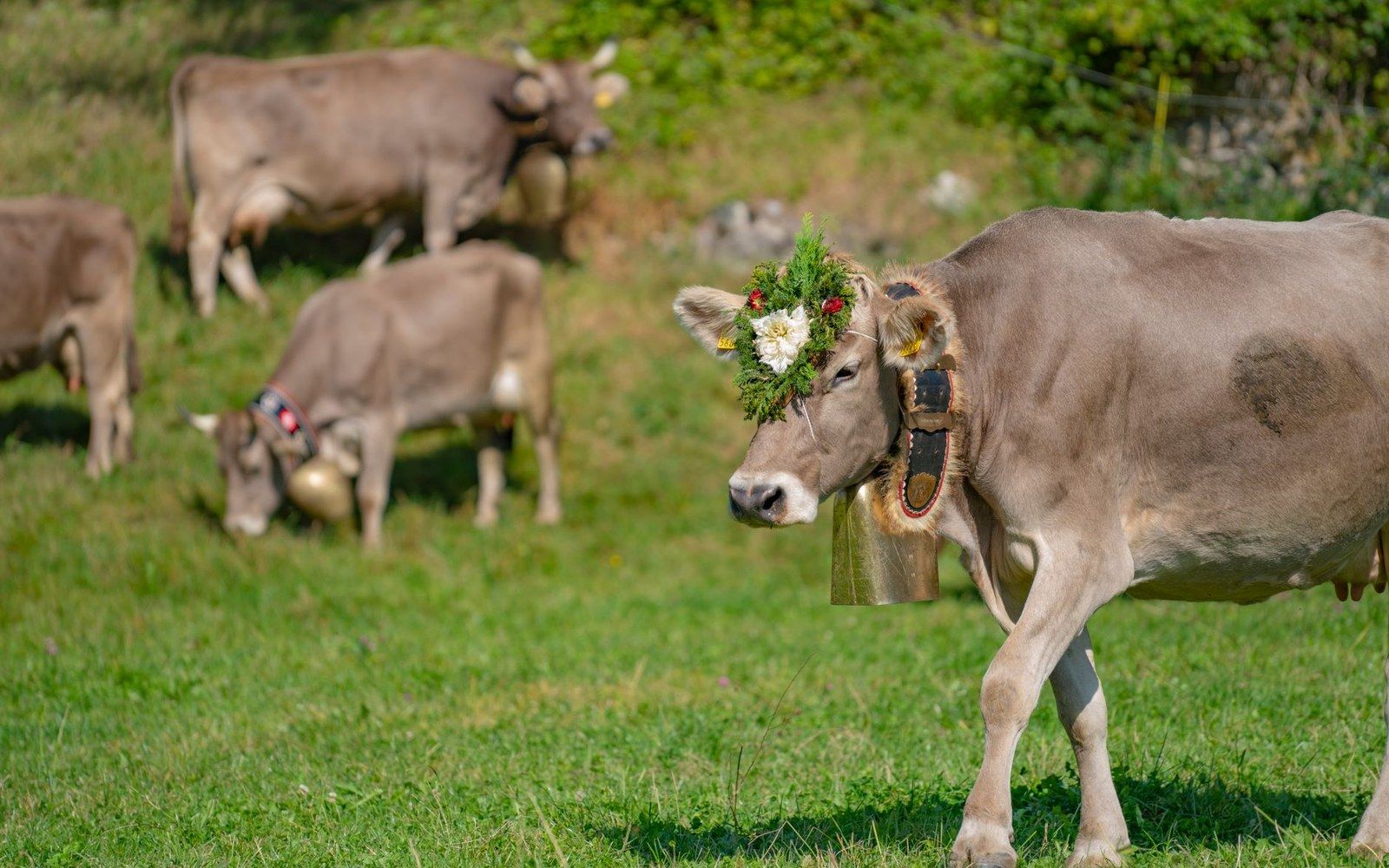
The montée is a calendar, not a decision: the herd moves when the grass does.
Photo: Sergio Zhukov / Pexels
That fat content is the cheese's defining characteristic. The IGP — Indication Géographique Protégée, the European designation protecting regional products by documented geography and method — specifies a minimum fat content of only 20 percent in dry matter, though wheels routinely reach 30 to 45 percent depending on the degree of skimming. Beaufort, by contrast, carries a minimum of 48 percent fat in dry matter under its own AOC rules. The structural consequence is immediate on the palate: Tomme has a firmer, more rustic rind — grey-brown and blotched with yellow and red moulds — and a drier, more elastic paste that reflects milk with its richness already removed.
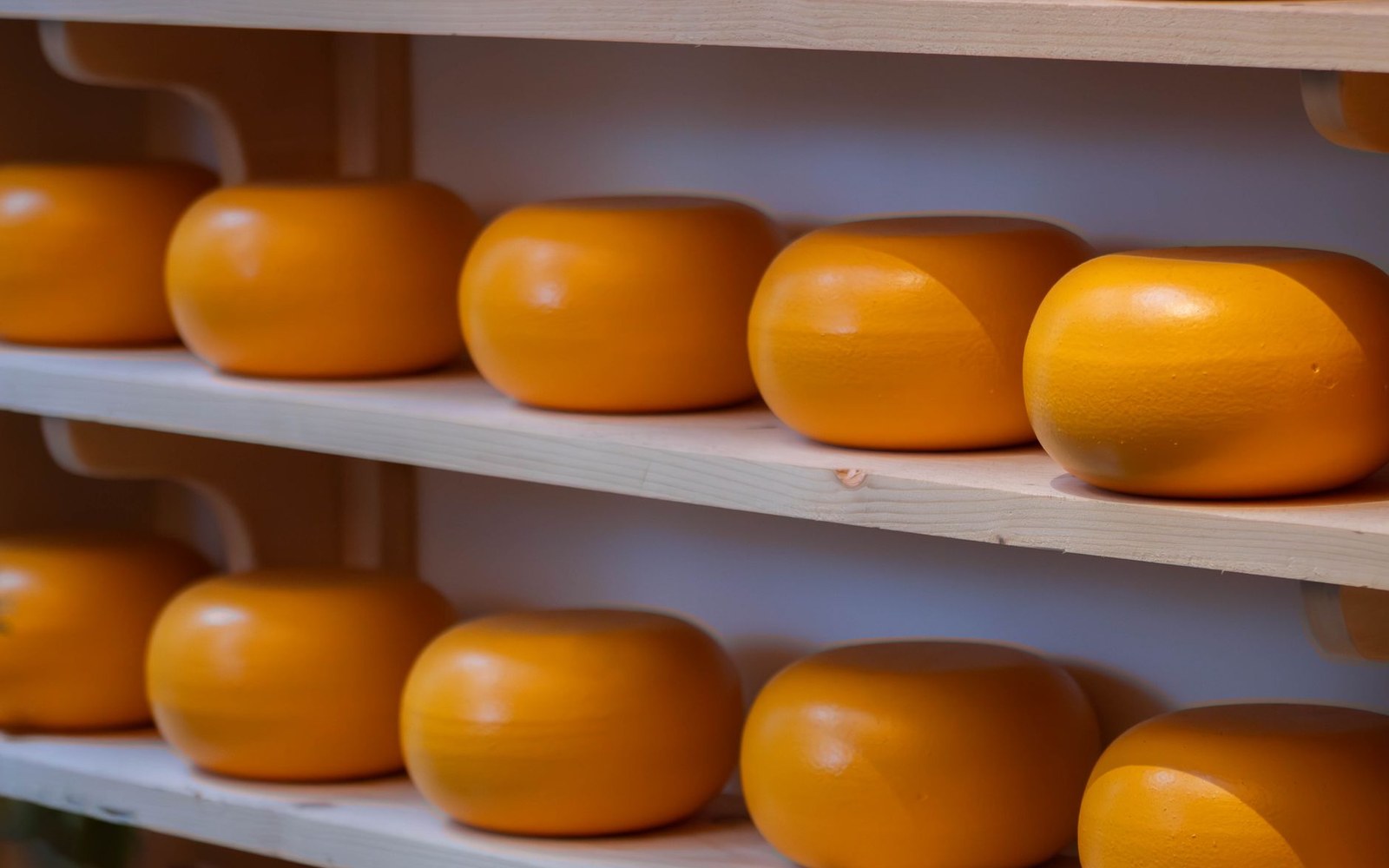
1 to 3 kg a wheel, turned and rubbed through an affinage the IGP regulates.
Photo: Najm Shihabi / Pexels
The IGP was granted in 1996, and its defined zone covers the departments of Savoie and Haute-Savoie in their entirety, as well as specific communes in Ain and Isère — a geography that follows the historical dairying range of the northern French Alps rather than a single valley or massif. Milk, pressing, salting and affinage must all occur within that zone. The wheel weighs between one and three kilograms and is pressed uncooked, distinguishing it from Beaufort's cooked-curd process, which extracts more moisture and enables the longer aging that co-operative cellars require.
What the Tomme represents, historically, is the logic of mountain frugality: nothing that could be transformed was discarded. The cream became butter, the butter generated income, and the skimmed curd became a cheese consumed locally — kept at the alpage, shared among those who made it, rarely exported in any formal sense until modern distribution made it viable. The IGP did not invent that geography; it documented one that transhumance had already drawn.
Specification and structure
| IGP granted | 1996 |
|---|---|
| Minimum fat in dry matter | 20% (wheels in practice: 30–45%) |
| Beaufort minimum fat in dry matter | 48% (AOC) |
| Wheel weight | 1–3 kg |
| Curd type | uncooked, pressed |
| Affinage zone | Savoie, Haute-Savoie, parts of Ain and Isère |