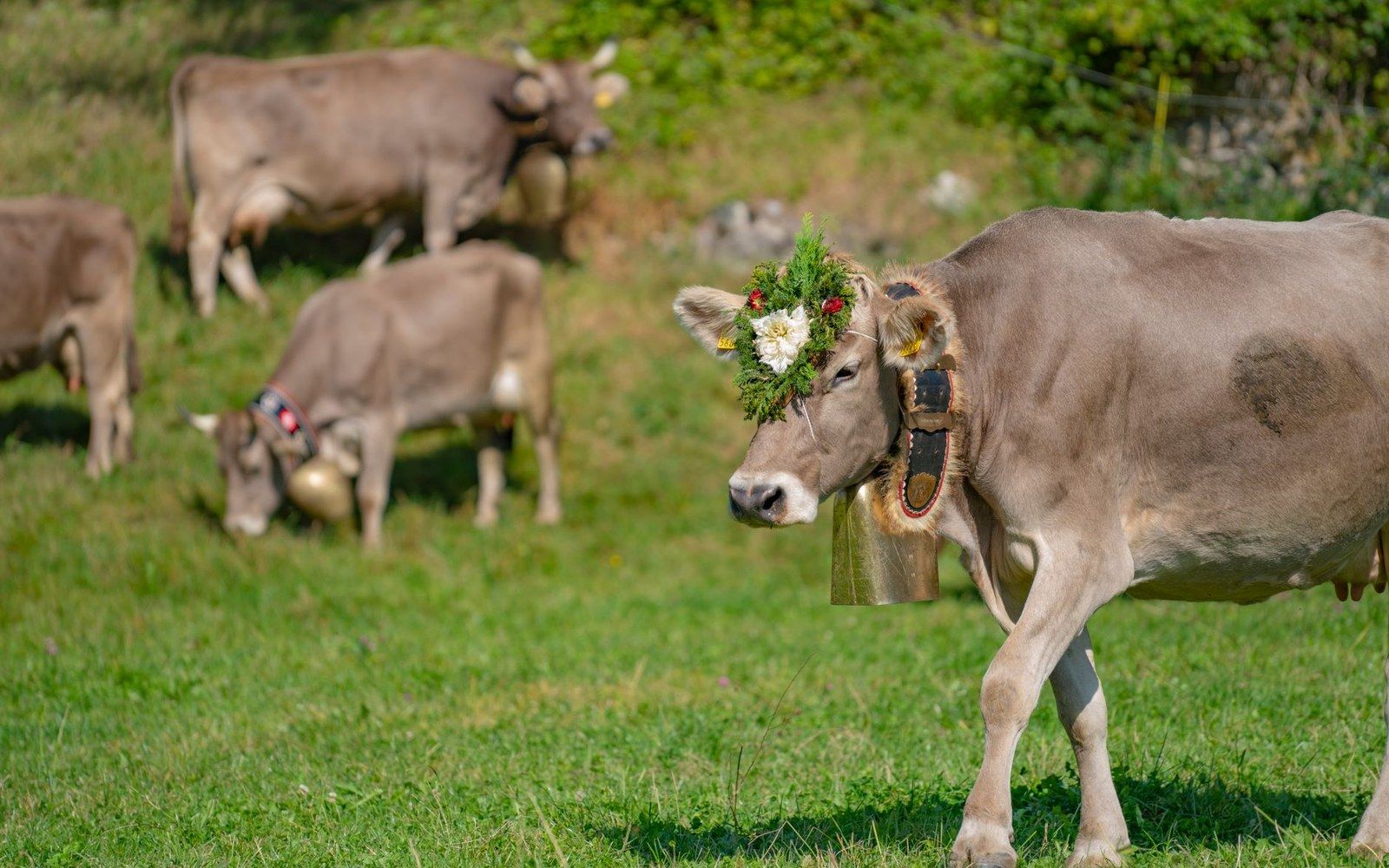
The montée is a calendar, not a decision: the herd moves when the grass does.
Photo: Sergio Zhukov / Pexels
The Calendar of Ascent
The seasonal clock that moves livestock up the Savoyard Alps — and the infrastructure that makes it run
The Montée and Its Dates
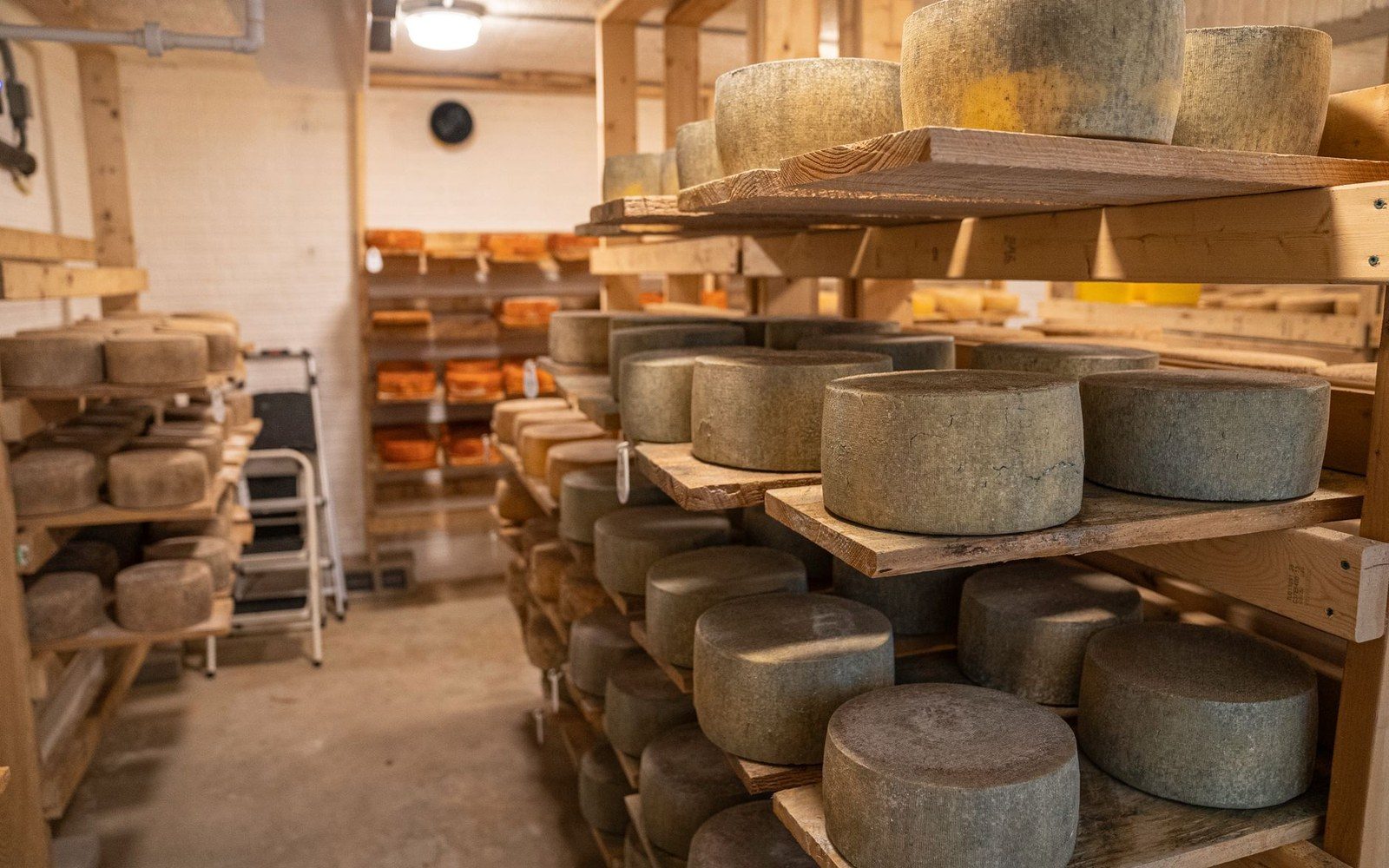
Turned and salted on pine. The shelf is written into the specification.
Photo: Mark Stebnicki / Pexels
Transhumance — the seasonal movement of livestock between lowland winter pastures and high alpine summer grazing grounds — runs to a tighter schedule than it appears. In the Maurienne and Tarentaise valleys, the montée, or ascent, typically begins in late May and extends into mid-June, calibrated less by the calendar than by snowmelt at successive altitude bands. The herds do not simply go up: they move in stages, grazing valley meadows through April, then intermediate pasture between roughly 1,000 and 1,600 metres through May, before reaching the high alpage proper — above 1,800 metres in most Savoyard cases, sometimes above 2,200 — by mid-June. The descent, the désalpe, runs in reverse through September into October, timed against the first hard frosts.
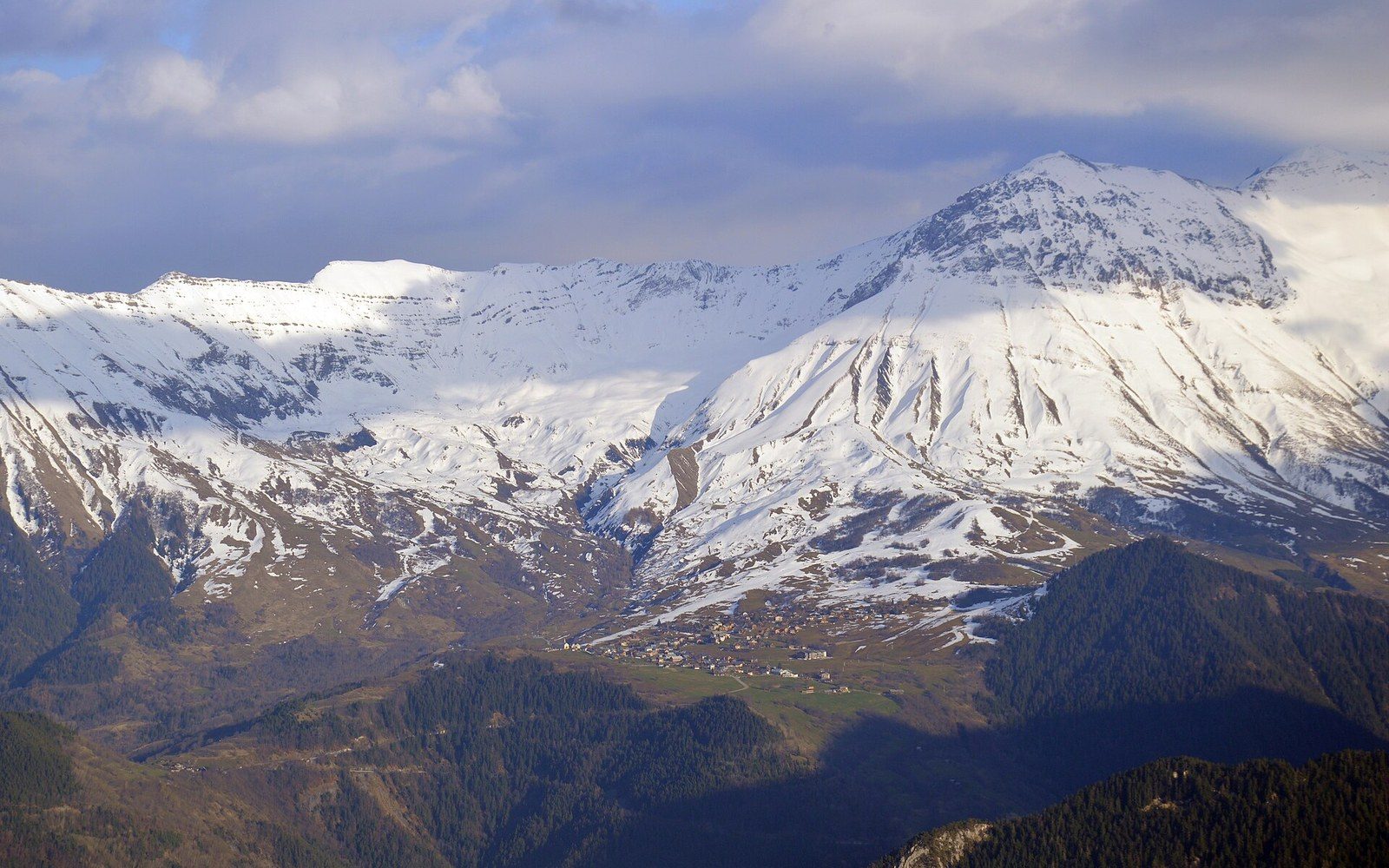
Stone base, timber frame, lauze above: three answers to the same snowload.
Photo: View of Albiez-Montrond from La Toussuire, 2023 · Wikimedia Commons
These dates are not traditional custom alone. They are embedded in conventions d'alpage, the legal grazing contracts registered with the relevant commune or the Parc national de la Vanoise, which set the period of authorized use, the permitted head count and the obligations of the herdsman. The Vanoise, created in 1963 as France's first national park, administers several dozen such alpages within its boundaries, and its public documentation records both the authorised dates and the actual species carried — cattle, sheep and, in a small number of cases, goats.
The Infrastructure Beneath the Image
What sustains transhumance is physical infrastructure, much of it built or rebuilt in the nineteenth and early twentieth centuries, and much of it maintained today by the communes that own the land. The drove roads — chemins de transhumance or drailles — that traverse the altitude bands are graded paths wide enough for cattle in file, their gradients eased at difficult sections by stone paving or cut steps. Many follow alignments documented on early Institut Géographique National survey maps; the IGN's 1:25,000 series still marks them as distinct from hiking trails.
At intervals along the routes and within the alpage itself, stone-built water troughs fed by piped or channelled springs — the abreuvoirs — represent the fixed hydraulic logic of the whole system. Cattle require water at specific intervals of vertical ascent; the placement of troughs, some of them eighteenth-century construction, effectively defines the usable route. Above the permanent treeline, where springs freeze until late May, some alpages remain inaccessible a week or two longer than their altitude alone would suggest, simply because the water supply is not yet running.
Turned and salted on pine. The shelf is written into the specification.
Photo: Mark Stebnicki / Pexels
The shepherd's hut, the chalets d'alpage, is the other fixed point. In the Beaufortain and upper Maurienne, these stone structures — low-pitched roofs of lauze where the material was locally quarried — functioned as both sleeping quarters and cheese-making facilities. Beaufort, the AOC cheese produced from milk of Tarine and Abondance cows at summer altitude, is still made in part on the alpage itself, the morning and evening milk processed in the chalet rather than brought down. The AOC specification, administered under French law, requires that the cheese be made from the milk of animals grazing on defined mountain pasture: the cheese's legal identity and the transhumance calendar are, in effect, the same document.
What the Record Shows
Collectively these elements — the dated contracts, the IGN paths, the hydraulic infrastructure, the AOC specification — constitute a system that is genuinely documented, not simply remembered. Commune archives in the Maurienne hold grazing registers going back to the eighteenth century. The Parc national de la Vanoise publishes pasture data recording herd counts and alpage use across its territory. Where alpages have been abandoned — and some have, as pastoral economics shifted in the late twentieth century — the infrastructure remains legible on the ground: troughs dry, paths overgrown, chalet roofs collapsed but walls standing, a record of the system's former extent written in stone.
The montée is, in that sense, an argument made every June that the upper mountain is still in use, its altitude bands still mapped by the logic of grass, water and a dated contract.
Chronology
- Late May to mid-Junemontée, the ascent, in stages by altitude band
- Mid-Juneherds reach high alpage, typically above 1,800 m
- September to Octoberdésalpe, the descent, timed against first hard frosts
- 1963Parc national de la Vanoise created; alpage conventions brought under park administration