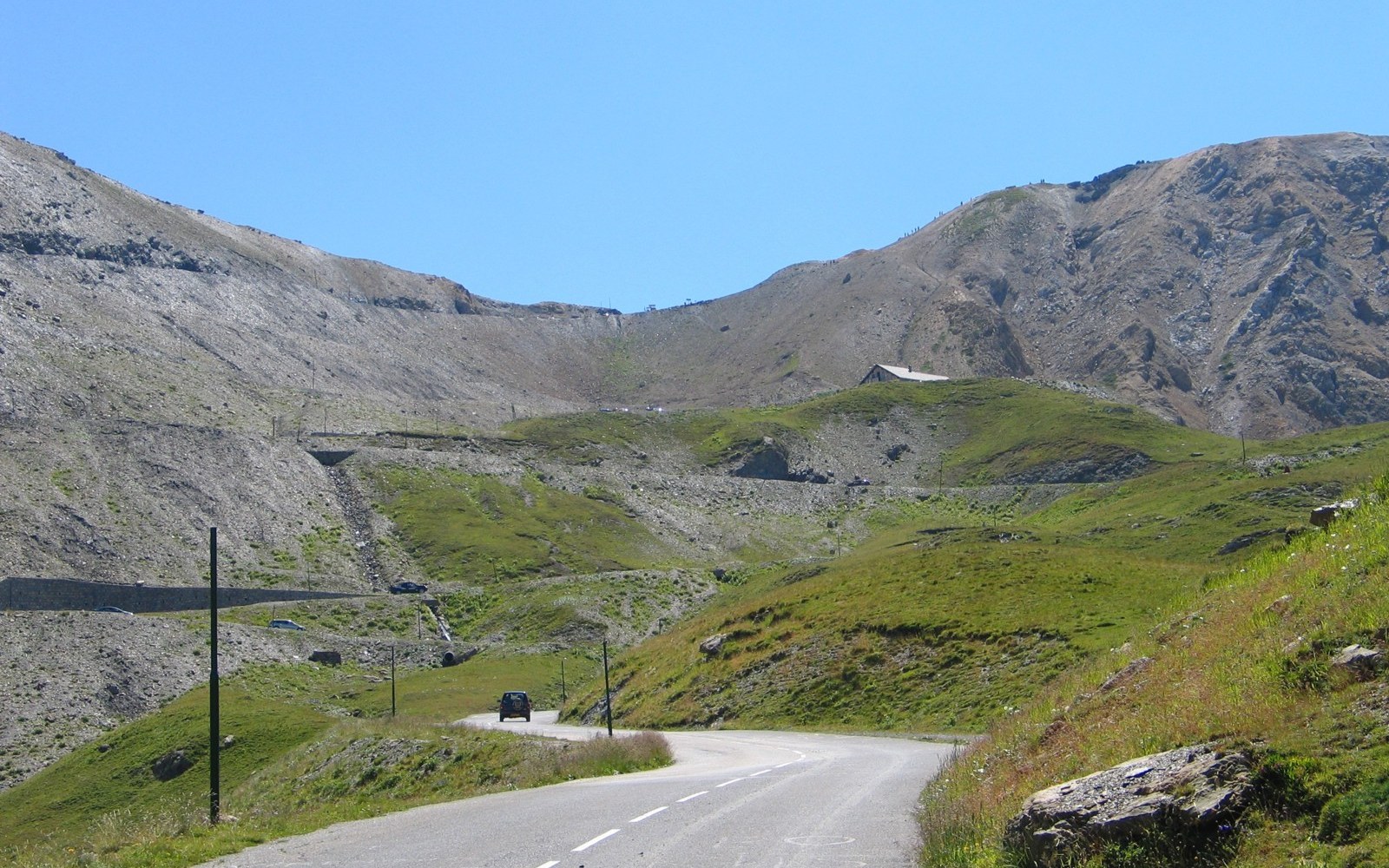
Desgrange sent the race over this to prove the road was passable.
Photo: Galibier · Wikimedia Commons
Desgrange Sent the Race Over the Road to Prove the Road Existed
Henri Desgrange used the Tour de France as an engineering audit — the mountain stages of 1911 and after were evidence, in the form of bicycle wheels, that a road was there
The Summit as Certificate
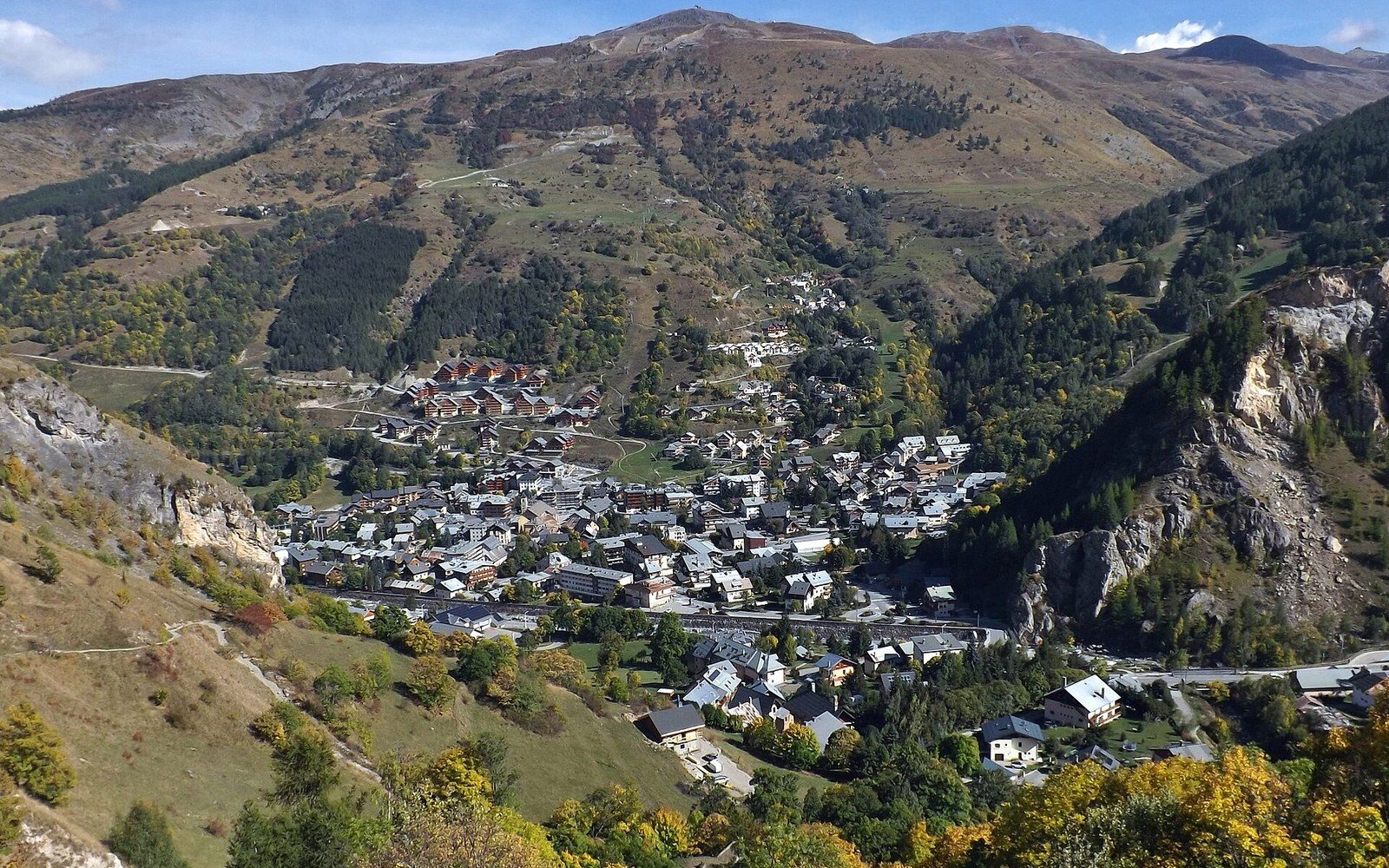
Valloire, between the two climbs — the reason the Télégraphe is never the point.
Photo: Valloire, automne 2015 · Wikimedia Commons
Henri Desgrange founded the Tour de France in 1903 as a newspaper stunt — L'Auto's circulation figures were the real target, not the welfare of the riders. What he discovered, or perhaps calculated from the start, was that sending the race over a mountain pass did something a road inspector could not: it demonstrated, in public and under dateline, that the road existed and was traversable end to end. A pass that survives a peloton survives a motor-lorry. The logic was not subtle, but it worked.
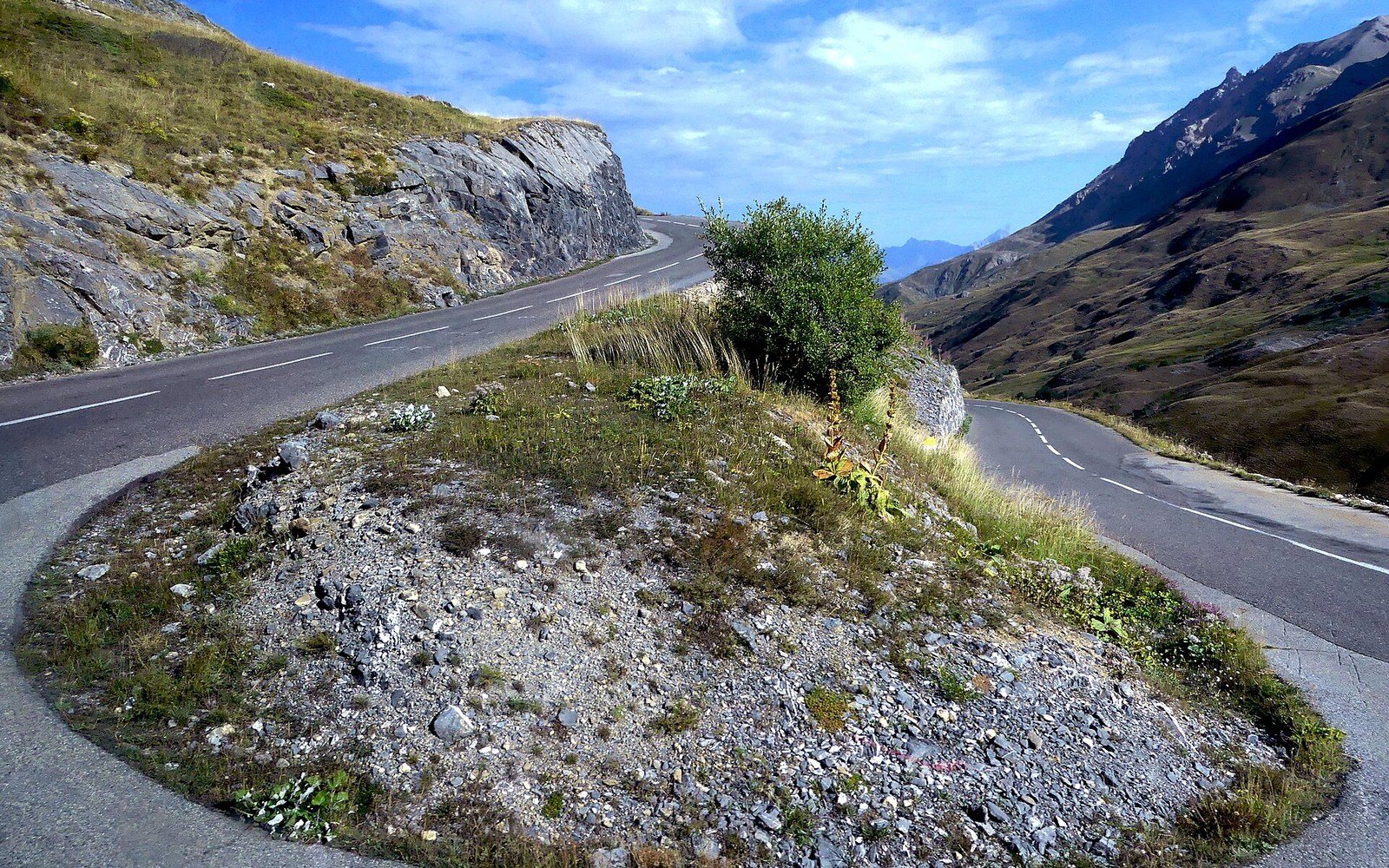
The switchback ladder below the tunnel: every bend buys height a straight line could not.
Photo: Lacet Route du Col du Galibier à Valloire (septembre 2024) · Wikimedia Commons
The Col du Galibier entered the Tour in 1911, the year Henri Desgrange first sent the race over the full summit at 2,642 metres (IGN). The Galibier road had been open in some form since 1879, but open is a word that means different things at different altitudes. Passable by a determined surveyor in July is not the same as passable by a laden vehicle in commercial use. The 1911 stage — from Chamonix south through the Maurienne and over the Galibier to Grenoble — resolved that ambiguity. Émile Georget was the first rider over the summit, dismounting at points but reaching the top nonetheless; the road held, the times were recorded, and Desgrange, covering the race for his own paper, declared the moment historic. He was correct, though his reasons were less pure than he claimed.
Desgrange's monument stands at the Galibier summit to this day, a stone block inscribed to his memory, placed there because the race's organizers judged that he had given the pass its modern meaning. The judgment is fair in a limited sense. Before the Tour, the Galibier was a road on a map. After the 1911 stage, it was a road on a record — something verifiably done, not merely planned.
The Hairpin Count and What It Measures
The twenty-one numbered hairpin bends of the Alpe d'Huez climb are one of the most photographed pieces of road numbering in the Alps, and they are frequently misread as a piece of sporting theatre. They are also a road-engineering document. The bends are counted from the bottom, descending in number as altitude increases, so that hairpin twenty-one sits at the base and hairpin one crowns the final approach to the resort village at roughly 1,860 metres. The counting system was not devised for television — it predates the resort's commercial development — but it became useful to broadcasters because it gave a precise spatial vocabulary to a hillside that would otherwise be a blur of tarmac and crowd.
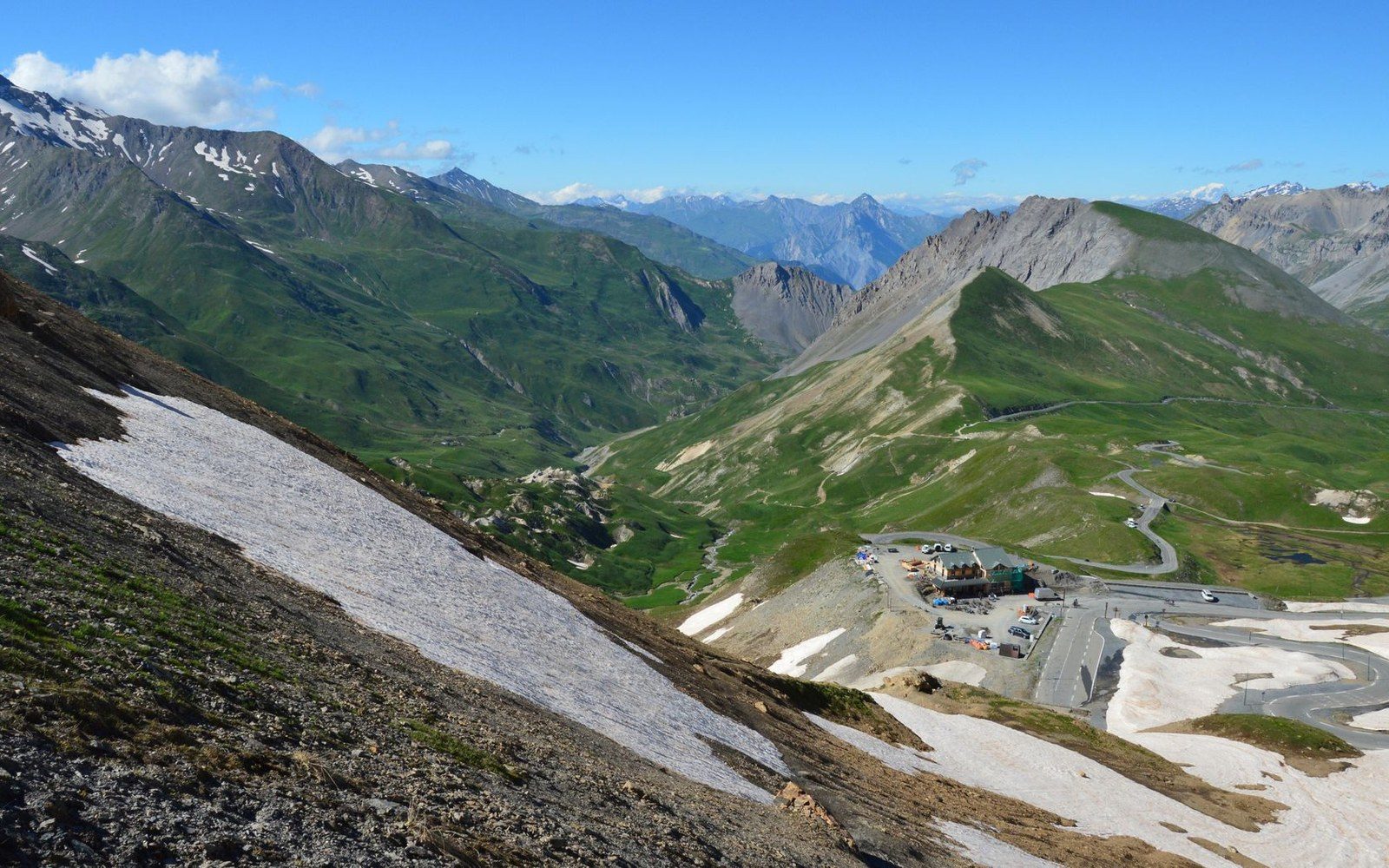
The last kilometres to the col, where the road stops pretending to be a road.
Photo: SlimMars 13 / Pexels
The Tour de France first finished at Alpe d'Huez on 4 July 1952, with Fausto Coppi winning the stage ↗ in a time that established the climb as a viable stage finish rather than merely a transit route. The road to Alpe d'Huez had been built to serve the ski resort then developing above Bourg-d'Oisans; the Tour's use of it was, again, a form of certification. The race returned for a second summit finish only in 1976 — a twenty-four-year gap — and from 1979 onward it came back repeatedly, the stage-finish dates accumulating into what amounts to a usage record.
Reading those dates — 1952, 1976, 1977, 1979, and thereafter at increasing frequency — maps directly onto the road's maintenance history and the resort's capacity to handle the logistics of a race finish. A Tour stage finish requires not only a road but a road wide enough for barriers, vehicles, team buses and broadcast infrastructure. The intervals in the Alpe d'Huez record are not athletic pauses; they are engineering windows.
The Maurienne Passes as a Sequence
The same logic applies across the Maurienne. The Col du Télégraphe, at 1,566 metres, is invariably treated by commentators as the appetiser before the Galibier. That framing obscures the fact that the Télégraphe road, climbing from Saint-Michel-de-Maurienne above the valley of the Arc, was a distinct engineering achievement with its own construction history, and its presence in Tour de France route sheets confirms, year by year, that the surface was judged adequate for the race. When both the Télégraphe and the Galibier appear in the same stage, the organizers are certifying a continuous road corridor from the Maurienne floor to over 2,600 metres — a vertical gain of more than a thousand metres of maintained tarmac.
Key elevations (IGN)
| — | Col du Galibier — 2,642 m |
|---|---|
| — | Col de l'Iseran — 2,764 m |
| — | Col de la Croix de Fer — 2,067 m |
| — | Col du Télégraphe — 1,566 m |
| — | Alpe d'Huez finish — approx. 1,860 m |
| — | Alpe d'Huez hairpin count — 21 bends, numbered descending from base to summit |
The Col de la Croix de Fer, at 2,067 metres (IGN), and the Col de l'Iseran, at 2,764 metres, complete the Maurienne's roll of Tour summits. The Iseran entered the race in 1939, two years after its road opened in 1937 — fast adoption, by historical standards, and explicable by the road's status as the highest paved pass in the Alps. Desgrange included it that year; his race reached the Iseran summit on 25 July 1939, making it the highest point the Tour had ever reached, a record verified by the race's own historical archive ↗. The stage used the road as evidence of itself, in exactly the pattern the 1911 Galibier had established.
The Survey the Riders Did Not Know They Were Conducting
None of this requires the riders to have understood their role as road-testers, or Desgrange to have articulated a theory of infrastructure publicity. What matters is the structural relationship: a road capable of sustaining a Tour stage is a road that has been surveyed, graded, resurfaced where necessary and inspected by race officials in advance. The reconnaissance — the pre-race inspection run driven by the Tour's technical staff — is itself a road audit. When that audit passes, the stage is announced; when the road fails it, the route is adjusted. The published stage list is therefore a dated record of which roads, in which years, met a consistent standard of passability under load.
Desgrange's instinct, whatever its commercial motivation, produced something more durable than newspaper sales. The col climbs of the Tour de France since 1911 are a century-long dataset of Alpine road condition, organized by date and altitude. The IGN maps show where the roads go; the race results show when they were there to be used. Taken together — summit, gradient, date, stage winner, and the monument that Desgrange eventually earned at the top of the Galibier — the Tour reads as a working document of how the French Alps were opened to continuous circulation, one hairpin at a time.
Chronology
- 1879Galibier road opened in initial form
- 1903Tour de France founded by Henri Desgrange for L'Auto
- 1911Tour crosses the full Galibier summit for the first time; Émile Georget first over the top
- 1937Col de l'Iseran road opened, highest paved pass in the Alps
- 1939Tour de France reaches the Iseran summit, 25 July; highest point in Tour history to that date
- 1952First Tour stage finish at Alpe d'Huez, 4 July; Fausto Coppi wins
- 1976Second Tour finish at Alpe d'Huez, twenty-four years after the first
- 1979 onwardAlpe d'Huez becomes a regular Tour fixture